Player Avatar
I'm a Real Person
I Own a Game!

Agent Minivann

gamer level 4
2157 xp
followers
13
profile badges
Plaid Hat Games fan
BoardGaming.com Beta 1.0 Tester
BoardGaming.com Beta 2.0 Tester
Gamer - Level 2
recent achievements
I'm Gettin' the Hang of It
Claim that you have played a game today by clicking the "Played Today!" button on a game page 10 times.
Novice Reviewer
Novice Reviewer
Review 5 games and receive a total of 140 positive review ratings.
Critic - Level 2
Critic - Level 2
Earn Critic XP to level up by completing Critic Quests!
My First Game Tip
My First Game Tip
Submit a game tip, strategy, or house rule.
10
Go to the Summoner Wars page

Summoner Wars

11 out of 12 gamers thought this was helpful

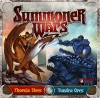
The Summoner Wars iOS app is a really nice implementation of the Summoner Wars expandable card game. It is free with one playable faction (the Phoenix Elves) and you can play against AI playing one of the original 4 factions. Make an online purchase through the app and it opens up more playable factions (the first eight), online play, and reinforcements.

The translation from physical to virtual was well done. If you have played the game in meat space, you can play the iOS game without too much trouble. I think the biggest challenge to veterans of the physical game is when choosing to use a special ability rather than an attack. Dragging from the left side of the card will attack while dragging from the right side will use the special ability. It also will highlight an attack target with red, and it uses a green highlight for abilities. This can be a problem on the smaller screens of the iPod touch and iPhone, but you can zoom in to make this easier. Those unfamiliar with the physical game can make use of a tutorial and/or read the rules on the device.

The AI for the game can be anywhere from silly to downright stupid at times. Considering the kinds of decisions that can come up in a typical game, this is almost to be expected. It could have been better, but making it better would probably make the app a lot bigger and/or make the app seriously slow down the device. I think that is really kind of a moot point, however, because online play is where it’s at. You can play multiple games at the same time, and you can choose to play a quick game or a leisurely game that takes days. It’s really cool to be able to play a game with the designer.

Where the game really shines is in the ability to customize decks. I never really tried it out with the physical game apart from swapping a mercenary for one of my champions. The iOS app (with reinforcements purchases) allows you to make custom decks and save them. After building a selection of custom decks, you can start a new game with either the original or the custom deck. Just a couple taps on the device and you’re good to go. In the physical game it might involve pulling out cards, and putting others in. Some gamers might feel the need to reset to the originals, or to have another copy to maintain the original plus the custom. Instead I can have the original, or a whole lot of customs, and I can get started with either fast.

I really like this app. It is a good value, and it really opened up a previously unexplored aspect of the game.

10
Go to the Mice and Mystics page

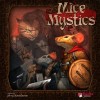
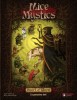
Mice and Mystics

161 out of 167 gamers thought this was helpful

I have to start this by telling a brief story. It seems appropriate.

About 7 years ago I picked up Heroscape after seeing commercials for it on Saturday morning cartoons. I remember reading through the rules and thinking that it was a special game. I saw it for almost unlimited possibilities that it presented. It could be played as a simple kill em all skirmish, or if could be a RPG-lite game. Put some thought and creativity into map and scenario design and it was a great toolbox for a lot of gaming fun and memories.

Fast forward to today (well a few days ago), and I find myself reading the Mice and Mystics rule book. I had some of the same feelings about this one that I did about Heroscape. Sure it is a little more limited in its wide open potential, but it presents an excellent toolbox for fun.

The game pits the forces loyal to the king, magically changed to mice, against the minions of Vanestra. You work together to thwart her evil designs as you negotiate the familiar, and suddenly much bigger, castle environment. You can explore the places familiar, and unfamiliar when you go through the holes and tunnels in floors and walls.

Each game tells a chapter of the story book. There is a reading section that sets the stage for what you will try to accomplish. You explore the castle trying to accomplish your mission, and fight Vanestra’s minions all along the way.

Cheese is kind of the currency and time keeping resource of the game. As you roll dice in combat you can collect cheese (one face of the dice awards cheese in combat). Cheese powers special abilities, it allows you to “level up” and gain new powers, and as minions collect cheese, it advances the story one page closer to the end of the chapter. You cheer when the cheese side of the dice comes up on your rolls, and you groan when the minions get cheese and you get that much closer to a surge of baddies.

The components are excellent. The minis are very cool and detailed even without compensating for their stature. The multipurpose dice are likewise very cool. The double sided (human areas and mouse tunnels) board pieces set the stage perfectly for the tales of adventure you will play out. A really nice touch is an index at the end of the rule book.

There is a finite number of chapters in the story book, and I’m sure there will be some who complain about there only being that many plays in the game. Plaid Hat Games already has a pdf download of a chapter for a buck. More of those in the future along with using your own creativity to write your own chapters lend a feeling of almost unlimited replayability.

While circumstances seem to be dictating that the Heroscape chapter of my life may be coming to a close, Mice and Mystics is stepping up to the plate and aiming its bat at the center field wall like Babe Ruth. I have that same feeling that it is a special game like Heroscape was and still is, and it has that extra bonus that my daughters are a lot more interested this time around.

8
Go to the Battleball page

Battleball

13 out of 14 gamers thought this was helpful

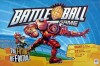
Battleball is an older mass market boardgame where players play a game of futuristic “football”. Game play revolves around moving your players to pick up a ball and move it to the end zone to score. It is a very easy game to learn, and it is a lot of fun.

Each player starts with 11 players on the field. Each mini has a base with a color with corresponding dice. The guys that are traditionally bigger and stronger (and slower) have d6 dice, while the faster and comparatively weaker have d20 dice, and all the typical dice in between. The mechanics are simple in that each mini uses their color’s die to both move and tackle. For moving, the higher the number, the more spaces you can move. The fast guys can potentially move up to 20 spaces. For tackling, the lower the number, the more successful the tackle attempt. So the d6 guys are much more reliable in tackles. Seeing how they are dice, randomness ensues and a d6 guy could outrun a d20 guy, and a d20 guy could bring down a d6 guy.

There are also simple rules for passing and fumbling. Also there are rules for minis getting injured and having to sit out the half, or the remainder of the game in severe cases. Each team also has a few optional special abilities that could come into play. The rules can be taught in minutes, and you can be up and running in no time. Games go for two “halves” where play starts and ends with a score. Essentially the first team to score twice wins, so if it is tied after the two halves it goes to overtime.

It is out of print, but it is a common thrift store or garage sale item. If you can get your hands on a copy, it is worth your time. Don’t expect real deep play, and it will be a gem. It wouldn’t be that difficult to find enough thematically similar minis from other games to make additional teams, and it would be fun to form a league with friends. It gets pretty decent game play for a light weight mass market game, and it could get more with a little customization and tweaking.

5
Go to the ROOK page

ROOK

15 out of 24 gamers thought this was helpful

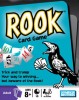
A trick taking game. Functionally it is a deck of cards with an extra in each “suit”. 1-14 in four colors plus the Rook. You start out bidding how many points you can win (5, 10, 14, and Rook cards score points). The winning bid declares what color is trump. Then you start playing tricks trying to score points. The bid winner tries to claim points totaling at least the bid, the other players try to prevent this, of course.

It is simple to pick up. Replay value is going to vary person to person; it’s either your kind of game, or it isn’t. I can enjoy it, but I really don’t want to play this one with my in-laws. To them it is a tradition, and they take it far too seriously.

8
Go to the Risk page

Risk

37 out of 38 gamers thought this was helpful

Almost everyone who plays board games has played Risk. Almost everyone who played Risk with any regularity has a good grasp on some basic strategies to employ, what continents are easiest to hold, how quickly to push the front. The most recent release of Risk has some subtle new tricks that make it feel new again.

For the most part it is the same game it always has been, and it can be played that way with up to 5 players. The components are updated a bit, but it is still a mass market game. It isn’t going to wow you with finely detailed and painted minis, or even wooden pieces. Some might even complain about the new arrows that are used to represent armies, but it brings a war room feel to the game.

The subtle changes are where things get interesting. For one, each player gets a capitol. The capitol is good for an army every turn as long as the player controls the territory where the capitol resides. The capitol can be in a different position each game, so that can alter the strategic value of territories substantially. Another change is the addition of cities. Essentially cities double the value of the territory where they reside. New armies every turn is determined as usual by adding up your territories and adding one per three territories, but you also add cities into the tally. Placement changes from one game to the next, like the capitols, and it also can have a significant impact on strategy.

Another change comes with the objective system that determines the games winner. Each game the winner will be the first to claim a number of major and minor objectives. The objectives are all in plain view of everyone, and everyone is gunning for those objectives. The objectives also carry with them rewards. Claiming an objective might also give you an extra defense or attack die. This objective and reward system, along with the cities and capitols, makes previously foolish decisions become wise and sometimes prudent. The objective system cuts game time down dramatically, either through early victory or a seriously weakened player after a failed attempt at an objective. The reward system makes going out on a limb much more profitable by giving the victor an advantage in future battles even if claiming the reward left he player spread a little thin.

It’s still Risk. It’s still a game about strategy and knowing when to stop attacking. It just has a few tricks up its sleeve that make it more interesting.

× Visit Your Profile