
Ascension
2-4
13+
30
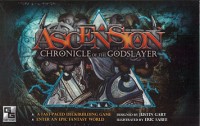
Ascension: Chronicle of the Godslayer is a fast-paced deckbuilding game that’s quick to learn, easy to setup, and packed with endless hours of replay value! Our goal with Ascension was to make a game that we would bring out again and again for our own game nights. With an all-star team working on design and development, including Magic: The Gathering Pro Tour Champions Justin Gary, Rob Dougherty, and Brian Kibler, we spent the better part of a year making a game that will appeal to fans of the board games, trading card games, and non-gamers alike.
Digital Version:
Gary Games and Playdek, Inc. have made a digital version of this game!
Check it out! >



Add a Review for "Ascension"
You must be logged in to add a review.
There are so many deckbuilders on the market that choosing one to start with can be overwhelming. While theme probably plays the biggest role in this process, if you end up playing one that feels “pasted-on” (cough*DC DBG*cough) you’ll likely realize it immediately and your experience can be ruined. So while theme dominates this genre of game, I felt much more secure making my selection based on seamlessly integrated gameplay and quality components. Such was my path to Ascension, maybe the most beautiful game in my collection.
Observed Set-Up and Play Time
Playing Ascension for the first time involves spending 15 minutes with one of the easiest and direct rulebooks out there and removing 4 or 5 decks of cards from cellophane. That’s it. Deckbuilding itself is quite easy to grasp, and once you get one it’s very easy to apply that knowledge to the others. In general games take about 15 minutes per player (the great solitaire option can be finished in 15 minutes!), and my first game took at most 40 minutes (2-player). Repeat set-ups take around 5 minutes.
My Learning Curve and Teach Time
If you have experience with other deckbuilders there is very little learning curve. I had played Marvel: Legendary, DC DBG and Quarriors prior to buying Ascension, and I knew all I needed to know of strategy going in. You’ll still sacrifice a game or two getting a handle on Ascension’s unique traits (races, hero v. construct), but you’ll be going full-bore by game 3. If you haven’t played a deckbuilder before it may take 10 or so games to grasp everything enough to build strategy. I have taught this game to someone who had never played a deckbuilder in about 10 minutes. She beat me by her 3rd or 4th game. Again, really easy to pick up.
Group Sizes and Dynamics
Without an expansion, Ascension only plays up to 4 (in fact, my copy came short 2 Apprentices, so it’s been limited to 3 players). I find it equally enjoyable as a solitaire, 2- or 3-player game, and I’m sure it scales smoothly to 4 players. There’s plenty of strategy and plenty of randomness, but it’s gone over well with everyone I’ve introduced it to. I will add that people who are more comic-book-fan than board-game-fan seem to enjoy it but prefer the comic book titles. I do not understand these people.
Objectionable Material
Ascension is a medieval-themed game, so guns and bombs are absent in favor of kid-friendlier swords and magic. Also, as with most card-based games, violence is completely implied/off-screen. But the artwork on the monster cards will certainly be scary to very young ones and the game is reading-intensive, so it’s probably not ready to be introduced to a child until they’re 7 or 8.
Comparable Titles
Ascension (like all deckbuilders) owes its existence to Dominion. But unlike most deckbuilders Ascension improved on Dominion’s recipe. Thunderstone appears to be very similar to Ascension, but adds a move-between-locations mechanic. Both Marvel: Legendary and DC Deckbuilding Game feel like direct rip-offs of Ascension (the changes they make are minimal and distractingly obvious), and there are countless other differently-themed deckbuilders. But only a few, like Nightfall and Tanto Cuore, look interesting to me.
This game has it all… it’s fun, quick, non-complicated but strategic, and the artwork is beautiful. As far as board game artwork goes, I would put Ascension up against anything. While I am personally more drawn to comic book or horror themes than medieval themes, this is such a superior product to those offered within my preferred wheelhouse that it has easily become my favorite deckbuilder. In fact, it trails only Sentinels of the Multiverse as my favorite card game of any kind. One note of detraction… at just 200 cards, it needs an expansion sooner than later to stay highly re-playable.
Ascension: Chronicle of the Godslayer is a light deckbuilding game in a fantasy setting for 2-4 players. The game is similar to Dominion but with a heavier reliance on random card draws.
Gameplay Summary
The goal of the game is to possess the most victory points, called Honor, at the end of the game through best utilizing the two currencies of the game – Runes, for purchasing heroes and constructs, and Power, for defeating monsters. Heroes provide immediate bonuses when played, while constructs remain in play and offer constant bonuses or actions, though both provide Honor at the end of the game. Monsters provide instant Honor in the form of physical tokens, as well as typically providing a one-time bonus after their defeat. Runes can be spent or monsters defeated from either a fixed set of weaker cards or the 6-card center row, which changes immediately as cards are removed from it.
Each player begins with a deck of eight Apprentices, which supply Runes, and two Militia, which supply Power. Each player can make as many purchases or defeat as many monsters as their current hand will allow, and they may do so in any order. At the end of each turn, any unused Power and Runes are wasted, and all heroes or unplayed constructs (those not already in play) are discarded. A new hand is drawn, and the discard pile is shuffled and placed as the player’s draw pile when their prior draw pile has been exhausted. This continues until both all Honor tokens are distributed and all players have had an equal amount of turns.
Gameplay Features
• Deckbuilding
• Hand Management
Components and Theme
The game comes with 200 cards, 50 plastic Honor tokens and 1 game board. The game board is nice and functional, though entirely unnecessary. The Honor tokens are of good quality and make it easy for other players to quickly tally any other player’s Honor token total. The cards are of fair quality, but the black borders will show wear quickly upon repeated plays, so sleeves would be suggested for frequent players if appearance is a priority.
Although this may seem strange for a game with fantasy artwork on every card, this game’s theme seems very thin. The artwork is heavily stylized, especially when compared with other deckbuilders like Dominion, and, thusly, detracts from the theme, in my opinion. The spending of Runes or Power feels like purchasing cards in Dominion. Where the theme shows most is in the individual factions, which each have unique bonuses their cards provide. However, the low number of cards and random drawing of them results in a lack of synergism for the majority of these cards to such a degree that mixing and matching the effects is typically the best course-of-action.
Ease of Adoption
This game is easy to learn and teach, especially so for players familiar with Dominion, and even the most casual players should pick up the rhythm of the game after only a few turns. Mastery of the concepts, which generally comes from simply knowing the cards, will take a few plays and is achievable by players of any experience level.
There is no direct conflict and little player interaction other than the bonuses awarded when certain monsters are defeated. Since there are no reaction cards, players simply suffer the penalties of the bonuses from monsters defeated by others and are rarely permanently impacted by those consequences.
Setup and Play Times
Setup is very easy and can be done in less than 5 minutes, even for new players.
Gameplay typically takes 30-45 minutes, though new player games may take longer due to them being unacquainted with the text of the cards. Each turn is relatively short, and though the simplicity of the game generally prevents analysis paralysis (AP), the random nature of the center row can lead players with AP tendencies to grind the game to a halt.
Luck Factor
Since every card in the center row is undeniably better than anything in the starting deck or the fixed piles, the random draw of the cards is a major determining factor in victory, especially so with higher player counts where cards change out several times between each player’s turn. A monster-heavy center row can force players into purchasing Power-granting cards en masse, but that row may be emptied of monsters by the time a given player can actually draw those purchased cards. The game’s strategy lies primarily in what to purchase or defeat and when to do so – whether for your own immediate benefit or to block an opponent – as well as ordering those actions for optimal effect.
Fun Factor
The speed of play and light nature of the game make this a fun filler game perfect for biding time between games, though its lightness and randomness does not make it a good main event.
Replay Value
Although this game is highly randomized, the extremely low number of cards in the base set results in variety problems. Whereas the Dominion base set has 500 cards, 252 of which can make up the randomized starting tableau, Ascension has only 200, of which only 100, many of which are not unique, make up the center row. This, as well as the simplicity of the gameplay, leads to the aforementioned variety problems after repeated plays.
Although not part of the scope of this review, there are two expansions available that add a number of new cards and a few new mechanics, as well as several available promos, which add significantly more variety.
Suggested Audience
This game is good for most gamers who want a light filler game or who enjoy deckbuilding games, and it seems to appeal to many CCG gamers, as well. I would not suggest this game for those gamers who prefer heavier fare with less reliance on luck.
Conclusion
Overall, I find Ascension fun, and it, combined with the other expansions, has recently become the most played game amongst my playgroups due to its quick play time and light feel. I do admit to liking Dominion quite a bit more, but Ascension has a well-established place in my playgroups and could have the same in yours, as well, if you do not go into it expecting a Dominion slayer.
That seems to be the most common phrase said after a game of Ascension. Lots of people think it’s fun. There is no doubt about that. It may not become your favorite game, or even your favorite deck builder game, but there is definitely an audience for this game and it’s easy to see why.
Ascension is well designed. The game is easy to learn but doesn’t feel too simple. The rules are fairly easy to follow even on your first time playing. Some cards might be a little confusing at first, but that gets resolved fast enough. The first game is the most simple on the rules. Both of the expansions add new things that can be tricky to keep up with at some occasional times, but nothing to scary in any of them.
The art is great. The game has a style and all the cards fit together into that style very well. Every card is illustrated by the same artist and every illustration is a work of art.
The game play goes by fast but you still feel like you have accomplished something with your built deck. You can easily make the game quite long if desired with easy house rules, which makes the game even more epic. I recommend it, but only if you are ready to go against some power decks.
I love this game as well as both of the expansions. My personal favorite seems to change from week to week, but all of them are worth picking up and playing at anytime.
Pros:
-Solid game.
-Easy to learn.
-Great art.
-Keeps you coming back with a different game each time.
Cons:
-The game can fly by pretty fast at times.
-The first has fewer variation on cards than the expansions.
Conclusion:
The game play is fast, easy to learn, but still has a strategy to it that will keep you thinking a few turns ahead. The game play is solid, the art is great and most importantly of all, you and the other players will have fun. Buy it. If you love it as much as I do, buy the expansions. You will not regret it.
Ascension has some good qualities but mostly outweighed by some bad qualities, particularly randomness.
Compared to other deck builders the artwork is a little lacking. It looks like the art from the original Hobbit animation but when presented in a 3d format, it’s flat, the energy of the design is also flat and so it doesn’t feed into a theme or atmosphere.
It’s a deck builder, ok but the major problem with this deck builder is that it has two degrees of randomness; the deck and the common pool. In every other deck builder you can develop a strategy or a plan of how you want to build your deck. In Ascension, the game has the basic elements and card mechanics of dominion (plus a second purchasing power via military) but the available cards to go after are randomized. You can build a deck to go after specific cards, spend your turn taking a card you don’t really want or need, only to be replaced by a card you do and then the next player snipes it from you. So, strategy is marginalized to luck of the draw. There is the 3 common cards that allow you to always get honor, but when that is available to everyone, then the it’s really just a simple clock.
The nice thing about Ascension compared to some other deck builders is the VPs don’t clog up your deck. That is my main complaint with dominion, but I understand it also acts like catch-up mechanics to the other players.
Deck builders are fun because the decision making takes place during the game as opposed to constructed deck where decisions are made primarily pre-game in creating the deck and then you let luck-of-the draw take form for the most part. Ascension is like a blend of pre-game decision making, luck-of-the draw element, and a touch of a real deck-builder but it doesn’t function well. Your decision making is obfuscated when you’re acquiring cards; decide between the few cards available and then employ hope.
If you want more meaningful decision making and more control over a deck builder, pass on Ascension.
If you want a light combination of a CCG and a DBG, Ascension might be ok for you.
I’ve played Deck Building Games since my friend Johnny introduced me to Dominion a few years ago. I generally really like them and like the mechanic of Deck Building, but have found that teaching games like Puzzle Strike(one of my favorites) is sometimes a little tough since new players don’t know what the pool of cards/chips is for or what any of the cards/chips do.
I had a copy of a game that I didn’t really like as much as I thought I would and I traded it to a friend for $30(what I paid for the other game) worth of credit on an order of his from an online store. I looked at their selection and compared the scores of the games that cost around $30 and decided to get this. I have to say I am very happy with the trade.
Not only is this a good Deck Building Game it’s a great introduction to the genre. It’s easy to understand and it’s easy to learn, and once you get more into the game you can see the benefits of the different Factions or Groups of Heroes.
One of the things that I really like is the art, yeah it’s not going to work for everyone, but it looks great for most of the cards, and it seems that the more expensive the card the better the art work, the high cost Mechana Constructs look better than the starting cards Apprentice and Militia. And the cards are very sturdy card stock, very thick and durable. I expect these to last for a very long time and not show too much wear.
The other thing that I really like Components wise is the Honor Points or Victory Points or whatever they’re called. The fact that you can collect little plastic rocks and use them to win the game is always worth an extra point in my mind. OK, maybe not a full point, but I like shiny things and this game has shiny things.
This game also has(in addition to shiny things) a great tiny thing, the Heroes and Constructs are done differently enough that they are easily distinguishable from each other. Heroes are cards that you can buy that you use and then discard, Constructs are cards that can help you each turn and once played can stay out on the table and help you every round.
The main thing that separates this game from Dominion or Puzzle Strike is that instead of a pool of types of cards that you use for the game you instead shuffle a deck of 200 cards and feed 6 cards at a time into a Center Line and those are your choices for the round. There are three types of cards, Heroes and Constructs as explained above and Monsters, which are worth Victory Points for defeating.
The game ends when a central pool of Victory Points is diminished, that triggers a final round for all players so that all players will have had an even number of turns. Then you count up VP and see who wins. There are two ways to get VP, one is fighting monsters and one is buying heroes and constructs which are worth points at the end of the game.
Overall I have to say that I really loved this game. I look forward to more playing but I expect it to be something that I can bring out and easily teach to any group. I also expect that I’ll be buying the expansions, hopefully very soon.
Ascension is based on a portal that is releasing Monsters into the world. Your job as a wizard, is to recruit allies who are also being spat out by this portal to help you vanquish the enemies.
Summary
The game consists of a starting deck of weak cards, that is used to gain/kill weaker cards. There are attack cards, used to kill the monsters in the middle row or the cultist. Then there are Rune Power cards that are used to purchase other cards to use in your deck.
There is a portal deck, a void, middle row of six card spots, heavy military, oracles, and a cultist. At all times, the middle row is filled with cards by the portal deck as cards are removed or defeated. Monsters defeated or removed cards will typically go to the void unless instructed otherwise. Heavy Infantry is a beefed up attack card and an oracle is a beefed up rune power card, which can be purchased at any point. Cultist is a monster card that can be killed at any point for honor.
Aquired cards consist of Heros and Constructs. Heroes are one shot cards, once played you exhaust the beenfit and at the end of the turn it is discarded. Constructs have the ability to stay in play and give you their benefit over several turns.
Pros
– The art is very unique. I tend to like it, but I’ve also read other reviews where people are less appreciative of it.
– Like Magic the Gathering, the cards have themes/colors which the card powers are usually based on. Example: Void cards are known for being able to get rid of cards in your deck. While Enlightenment will allow you to draw more cards.
– Cards are of good quality. Thicker cardboard and laminated.
– The game has expansions and you don’t need to waste a ton of money on packs of cards. These are one time purchases.
Cons
– Some people don’t like the randomness of the portal. There are times when there is nothing good in the middle row, and then as soon as you buy those cards, the middle row fills with better cards for the next player to take advantage of.
– Depending on which version of the game you are playing, it seems that different colors are more dominant than others.
Conclusion
I’ve tried a few TCG drafting games and they were really fun when I played them. Ascension does a good job of taking the elements that I liked from that style of play and making a board game out of it. Since then I’ve opened up to other deck building games and I feel that this game holds a good balance from deck builders that are too simple and others that are more elaborate. My main issue with this game is that once you’ve practiced the game enough, it starts to become clear what strategies are clearly better than others. I like to have options where I can stray from the norm and still be able to come out on top. That being said, I find this to be the problem with most deck building games and Ascension has had more options than some of the other deck builders I’ve played.
In the end Ascension is one of my first and still favorite deck builders. I would recommend it to anyone who is into fantasy (even a little steam punk) themed games, and has an appreciation for deck building.
Deckbuilding games and I have a very awkward relationship. When I was first introduced to the genre by the inevitable Dominion, I hated deckbuilding games. Sadly, my criticisms of Dominion aren’t unique. Like a lot of naysayers, I hated the lack of theme, I hated the one-way street metagame strategy, and I hated the lack of player interaction. A friend of mine tried another attempt into deckbuilding games with Thunderstone and that game just drove me further away from the genre with its clunky system and AEG’s terrible rule writers.
It wasn’t until recently that I started getting into deckbuilding games with my purchase of both Ascension and Nightfall. Since this is an Ascension review, we will stick to Ascension.
My first words when I opened up the box? “What the*?” The card stock was thick and almost ready to cracked, and the board itself (which is thankfully not needed) came in warped. For the price I paid for Ascension, this was an equivalent of a rip off and a half.
After card sleeving, I also realized another problem: The sleeved cards wouldn’t fit into the box. Not only this, but if I try to stuff ‘em in, there is a good chance that the cards would warp over time. I had to take the alternative route: Get those infamous white card boxes and stuff the cards in there. It worked, and made the game more portable. Since there was no need for the board, I decided to follow this alternative.
And finally, I decided to conquer the final territory: The rulebook. While the rulebook has very good graphics and an extremely nice layout that is easy on the eyes, it does miss one important feature: What do you with the center row after nabbing a card?
It was at this point where I practically regret purchasing this game. The components were something I expected from a garage-born publisher, not a professional company. The board coming in warped? Some of my cards already chipped on the front side? While not essential to the game, I certainly did pay for it.
But whatever, I am not going to stop myself from actually trying the game due to a lousy choice of components. This isn’t the first game that I have played where I had to deal crappy components, and it sure as* won’t be the last.
So I played with two friends of mine to see if this game was worth the price tag. The first thing they complimented was how badass the artwork was. I didn’t take a good look at it, but after their words, I did and I agreed. The artwork in Ascension is top of the line. The style seems to be along the lines of something I would find in an old book or the walls of a church. In fact, one of my more beloved (although aged horribly) animated series is Redwall which made extensive use of this type of art style. Ascension pulled this off very well and Sabee is definitely someone who should be getting more employment.
After a quick look at the cards, we finally decided to actually set the game up, since we actually wanted to play the * thing. So we did, and it didn’t even take five minutes. This is something I already loved, because every deck building on the planet takes far too long to set up. Here? You have a giant Portal Deck, give everyone their starter decks, put two separate “always available cards”, and the Hobo card (Cultist card for you naturalists out there). That’s it. No draft cards needed nor did you have to jump through dividers to get your cards. Just shuffle the Portal Deck, draw out 6 to create the center row, done.
So my friends and I were playing and 30 minutes later, we are done with our first game. We played again…for another 2 hours. One of our friends had to go and so it became a 1v1. We did this for another 3 hours, with beer/pizza breaks in between. After much carb and alcohol consumption later, we started discussing our tactics and our minds when we did key critical moves in the game.
Yep, we liked it, a lot. Ascension is probably one of the best games I have in my collection despite the oh-so-horrible components. It is definitely an overpriced game for the components, but the game was addicting and fun. Why? It’s a very simple game to setup, but the simplicity is such a huge deception to the game’s depth. It’s almost like Chess where Chess isn’t exactly hard to play, but becoming good at it is another story.
So what made it so good? For starters, it’s more a tactical game as opposed to a grand strategy game. The problem I had with Dominion is you had to stick to a script and get certain cards in the right order to win (e.g. Get the Witch ASAP if she shows up). It felt like a long puzzle game and there was barely any player interaction and it simply boiled down to “Who was better at solving out the riddle” as opposed to a card game involving players trying to do outdo and screw each other over.
Ascension fixes this problem with the center row. Basically the center row is a 6 card draw from the Portal Deck and acts as a “marketplace” for you to build your deck. This small dynamic alone changes the pace of the game. Instead of having a script at the start of the game, each turn requires you to change gear since whatever you can buy is always changing. Because there is also a limited quantity of cards of a certain type (with the strong cards being only one copy), therefore buying cards becomes a bigger problem since you don’t want your opponents to have the edge. The best part is these dynamics play in everyone’s turn, and because of the small selection of cards to buy, the process time isn’t long so you don’t have a lot of downtime even in four player games.
As for the depth of the game, it’s quite deep but certainly not as complex as other deck building games. I would say the good portion of the game’s depth is not only how certain card combinations will work, but also understanding the value of the cards during certain time frames of the game. For example, having an expensive card or a powerful monster early means the monster isn’t likely to be touched for a while. However, when players have a competent deck, then these powerful but expensive cards start playing a role in the game as being key components and the players must decide what to do when people reach that level (or perhaps reach that level before everyone else to take advantage?)
However, the game itself isn’t flawless. Ascension doesn’t scale well at all because of the center row. No matter how many players there are, 6 cards will always remain in the center row. What this means is in a 4 player game, the row is going to look much different when it comes back to you, thereby making the game less tactical and more on luck. Fortunately the official team variant in the Ascension: Return of the Fallen remedies this to some extent, but this game truly shines as a 1v1 game.
As for player interaction, it is certainly much more interesting than Dominion because of the abilities and tools available to thwart people’s plans. There are plenty of opportunities to mess around the centre row, thereby messing someone’s plans, and due to the limited copies of a certain card, sometimes buying the card is a form of an attack to another player. It certainly isn’t at the level of PvP as Nightfall, but a step-up from Thunderstone and Dominion.
With that being said, is it worth getting? It’s not for everyone due to the simplistic nature of the game and low-level playing being along the lines “grab the best card in the row and move on.” But for a simple game that is easy to understand but choke full of depth and easy to set up, it is worth getting despite the crappy components.
Pros:
– Very easy to teach and play.
– Extremely short set up time.
– Plenty of depth despite the simple rules
– Amazing artwork.
– Awesome 1v1 game.
Cons:
– Terrible card quality that should not see the light of day.
– My board came in warped…the*?
– Box insert does not enjoy sleeved cards.
– Rulebook forgets the talk about the center row?!
It amazes me how game designers come up with their ideas. I once heard someone say; they just drink a lot of beer, take a thesaurus, choose some random entries and hope for the best! I’m not sure exactly how they do it but I am very glad they do. And a prime example of this is Ascension: Chronicle of the Godslayer.
So, what’s different about Ascension then? Why would we pick this over Nightfall or Thunderstone? Well each game is great but there are some great reasons for each choice. Now for Ascension here is a big reason, it has roots from the father of all deck building games, Magic the Gathering – it was designed by MTG Tour champions Rob Dougherty, Brian Kibler and Justin Gary (who also founded Gary Games). One thing that I found impressive was that even though this is Gary Games first release you can tell that it was well thought out and it was not rushed at all.
Overall Gameplay
So here is the difference between Ascension and most other deck building games. First and foremost is the simplified take on the genre. Ascension has a focus on three major areas – Runes (it’s the money baby!!!), Power (used to kick @*# and take names) and Honor (this is where the win is. Victory points!). The amount of Honor used to start the game is based on the amount of players. When the last honor is taken, the games end is initiated, and whoever started the game don’t get another turn everyone else gets one making everyone’s turns equal.
There’s no limitation as to what you can do here as long as you have the Runes or Power – unlike in Dominion with its one action / one buy mechanic. Like other deck-building games, you start with a weak pile of cards, but your buying options are quite a bit different. You always have the option of buying certain cards suck as Mystics (more Runes) or Heavy Infantry (more Power) cards, or whacking the Cultist for a single Honor point, but there’s also The Central Row. This is six cards that will cost more Runes or Power to acquire or defeat, but will bring greater rewards – getting rid of one of them will see its spot replenished immediately, so making the right decisions can really reap you some good stuff.
Monsters
Monsters, as mentioned, will at least get you some Honor, but could also allow you to banish a card (chucking it into the Void – this game’s discard pile – which means you can whittle out the less important cards from your deck) or you may even have a chance to affect another player. Heroes boost your power, making monsters much easier to dispatch, but there’s also another type of card to consider – the Construct.
Constructs
Constructs are an interesting concept. Where most deck-building games have you discard everything you touch in a turn, the Constructs you manage to get your hands on actually stay in play, often giving you hefty bonuses (especially if you manage to pull a selection together). If you’re native to Magic then you might see these as Artifacts or Enchantments. Other cards in the deck can see Constructs returned back to players’ hands or discard piles, so they won’t always be around – but when they are, you’ll certainly have an advantage.
Play Time and Pretties
Games are quick – even a four player effort can be done in 45 minutes. The artwork is amazing, really showing the differences between the four in-game factions, while the cards and board are great quality – satisfyingly heavy and made to last (although you can get Ascension branded card sleeves if you so desire). Some of the flavour text is a bit cheesey, but hey these guys played MTG.(did you not read the flavour text on Grizzly Bears) Also, while it’s not a bad thing, you can tell that the whole game has been put together with expansion in mind, but what do you expect from a design team with such a huge love for MTG?
Summary
So now to the point of this review. Is this game worth getting, I know deck building games are not for everyone but if you’re a fan of these style of games then I say this is a must have. It hits the table every time our game group gets together because of the amount of time it takes to play. It’s a great game in my opinion, and with the ability to jump in no set up time and go. This is a must buy game. (If you’re a deck building fan)
Larry Fettinger and InD20 Group approve this review.
Hero in a strange realm, I choose you! Now, GO TO MY DISCARD PILE!
The gist of the game:
Do you know Dominion or Thunderstone or Rune Age or… okay this list is really starting to get long. This is yet another entry into the deck building genre.
Replay Value:
Come on, the whole point of deck building games is based upon the idea of replay value. I couldn’t really rate a deck building game above a 3 if it didn’t have replay potential, could you? I think not. 5/5
Components:
3/5 I can’t give a maximum score here because some of the art is a little eh. The art is really unique, though it is a bit nebulous at times. As far as the card quality, I can’t really give extra points simply because I played only with sleeved cards. The one big positive for components, the stones used to track honor! Those things are fun to grab and chuck around.
Easy to Learn:
3/5 This game does not have the complexity of some big box board games, but as far as deck building games go, it is definitely not an entry level help desk position. The poor player that tries to teach this game to deck building newbies will feel like a help desk clerk. Explaining the nuances will take a while and the first couple of games will be maddeningly slow, like dealing with an automated phone system where you have to speak to the computer before an actual operator.
2-4 players All I played was 3 player games. I don’t know if this would be a great 2 player game, but 3 or 4 seem grand. 13+ age Sure, seems straightforward enough. 30+ minutes Don’t sit down to play Ascension</b during your lunch break unless all players involved are good at making quick decisions and have played the game a few times before. 30 minutes? Gimme a break.
Conclusion:
The biggest bonus I could give to this game is when I got home after playing and found myself contemplating strategies and card combinations. That is a good sign.
Secondly, I like the idea of not having to keep the cards as organized as in Dominion. I only own two expansions to that game and it is already a huge pain to keep track of all the cards and cart around the boxes.
The biggest gripe I probably have for this game is that if you choose a focused military strategy, there is a chance you will get screwed. If you choose to go with no military, the same. This mainly comes from the monsters and the purchasable cards coming from the same deck and going into the same pool. A game could be all monsters, or no monsters. That would really mess up certain strategies and there is no way to know that it is going to happen from one game to another.
If you like deck building games, definitely try this one. If you don’t, try it anyway.
Ascension has quickly become one of my favorite deck building games. It is superficially like many other games in the same genre, so many people will be familiar with the basics. You have two types of resources, combat and runes. Combat is used to defeat monsters and gain victory point tokens and beneficial game effects. Runes are used to acquire heroes and constructs that go into your deck. Hero and construct cards have printed victory point values. Hero cards have one time effects when played, while construct remain in play and give their controller a constant benefit. All cards bought with runes go into the players discard pile and are shuffled into a new deck when their existing deck runs out of cards. Once all the victory tokens are gone from the board all players tally their total points from tokens and cards in their deck. The player with the highest total wins.
There are three cards that are always in play. Two of these are heroes that add combat and runes to your deck– the Mystic and Heavy Infantry. The third is a simple monster that can be defeated repeatedly for one victory point token– the Cultist. In addition to these there are six random cards from a larger deck laid out on the game board’s center row for players to pick from. As monsters are defeated and heroes/construct are acquired the empty slots are immediately refilled from the main deck, changing the available card pool every turn. This means play tactics shift each turn depending on what cards are available, unlike games with a static pool like Dominion or Eminent Domain.
The game’s theme centers around an evil god who must be defeated. The most powerful cards in the main deck represent his most powerful agents and your most powerful allies. There are four factions at play among the heroes/constructs. The Lifebound faction centers on gaining victory point tokens without defeating monsters while chaining better effects from playing multiple Lifebound cards on your turn. Mechana cards focus heavily on constructs which help pay for more constructs at reduced costs. Void cards focus on combat and thinning the players deck by allowing the player to remove their lower value cards from the game. Enlightened cards provide the best card draw in the game while adding some cards that auto-defeat monsters without having any combat stats themselves.
The core game is set up for up to four players and it functions best when played with three or four. Two players get somewhat tedious as there isn’t nearly as much card turn over in the center row. Each player gets ten very simple cards to start with. The first expansion adds two more of these starter decks allowing up to six players. Games of that size tend to drag as players wait for extended periods of tiem for their turn to come around. There is very little player interaction except for a handful of monsters that punish enemy players when defeated. The only other active way to mess up enemy plans is to purchase the cards that would benefit them most before their turn allows them to do so. This can of course be risky because those cards may not benefit you as well, and a varied approach to deck building often means that there are at least one or two good options on the table for everyone each turn.
The variety of card types and ever changing pool of available cards makes Ascension: Chronicles of the Godslayer a very fun game with lots of replay value. It is quick to play, easy to teach, and graphically appealing. Gary Games has supported it with two expansions and a number of promotional cards available through their website and at conventions.
This game involves the mechanic of purchasing cards from a central supply in order to gain points and build a powerful deck. Players of Dominion will be very familiar with this concept. However, there are some key differences between the two and the devil is in the details.
First, I’d like to address components. The cards feature excellent, bizarre artwork reminiscent of MTG cards which I love. The game includes a game board (not necessary, but a nice touch) and colored point gems. The case is very nicely designed to fit all the components perfectly. The only drawback is that the glossy texture of the cards feels cheap and strange and can be a nuisance.
Like Dominion, you use ‘money’ to buy cards from the central supply. Unlike Dominion the cards in the supply are constantly changing rather than being a fixed set. Also unlike Dominion, Ascension includes monsters which can be ‘banished’ using attack points for a point reward. This functions in a similar way to the purchasing but requires a separate set of currency cards. Most of the cards purchased for your deck earn you points at the end of the game and other points can be gained by various actions and are tracked using the gemstones.
Ascension also introduces the concept of constructs, persistent cards that affect the users hand every turn (like MTG’s enchantments or Dominion Seaside’s duration actions). After accruing a few of these cards, you can quickly get to the point where you’re juggling multiple buffs and points each turn.
Between the complicated scoring system, the two types of ‘money’, and the time spent adding up the abilities of the constructs, I found this game to add a lot of complexity without much payoff. The game feels less strategic and more random than either Dominion or MTG and ultimately less fun. While it’s is a nice change of pace for those who might be looking for a change of pace, it lacks some of the balance and polish that makes Dominion such a great game.
Ascension – Chronicle of the Godslayer (“Ascension” for short) is a Deck Building game set in a mythical universe of monsters, mechanical constructs, nature bound humanoids, mystical wizards and worshipers of dark magic. Designed by a group of professional Magic: The Gathering players, Ascension does a fantastic job streamlining the deck building concept and distilling the genre down to a quick playing and fun romp with multiple strategies and combinations.
Ascension currently has 2 expansions with another to be released shortly. Each expansion can serve as a stand-alone game or be combined in a variety of ways to mix up the possibilities.
For those of you reading this who are already familiar with other deck-building games like Dominion, Thunderstone and Resident Evil – this review is basically done: try out Ascension – you will not be disappointed.
For the rest of you still reading – I thought I would take a bit of space describing what a deck-building game is and how it can help you be a better player in other games (especially collectible card games like Magic: The Gathering, WoW:TCG, Pokemon, etc.).
As the name suggests, a Deck-Building game focuses on each player gathering cards to put in their deck in order to achieve some goal – typically scoring some type of victory points. The cards which you ‘purchase’ during your turn will be mixed in with the cards you already have in your deck – and will have an effect when you draw and play them. In many of these games (including Ascension), the cards will serve as both victory points in the end-game, and also trigger actions during the game to either allow you to buy more cards, gain victory points or many other effects.
Each turn you will be adding cards to your deck – this is a double-edged sword, as the cards you ‘buy’ are generally valuable and you want to play them; however the more cards you have in your deck, the less chance a particular card will show up on a given turn. To counteract this, Ascension has cards which will allow you to remove cards from your deck – in effect streamlining it. Often times players will be faced with a conundrum as they weigh out the cost of ‘banishing’ a card since its effect is not that useful, with that card’s victory point value which will not be counted if the card is banished.
This simple concept is the heart of deck building techniques in almost all collectible card games currently in print – and often one of the most overlooked skills for new and intermediate players. Deck building and tuning in an important skill for being competitive, and Ascension teaches basic techniques without even trying.
For me, Ascension is the best of the deck-building games to date. Combining ease of play, an interesting and highly variable starting game state and wonderful card art makes it a clear winner.
What is Ascension?
Ascension:Chronicle of the Godslayer is a deckbuilding game in the vein of Dominion. Each player takes an individual turn which consists of playing Heroes and Constructs from their hand to gain Runes (the money attribute used to buy new cards) and Power (the money attribute used to kill Monsters.) Cards are flipped from the Portal deck into a communal purchasing area. These cards can be Monsters which players can banish to the void for Honor (victory points), Heroes which players will gain into their decks to be played on future turns, and Constructs which the players will also gain, but once they are played they will remain in front of the player to provide a small bonus until they are forcibly discarded from play. Heroes and Constructs provide a certain amount of Honor as well. The cards themselves are full sized and wax coated for longevity (though some of my cards are improperly coated or lack coating at all, making them very easy to tell from the rest of the cards when shuffling and drawing.) The game also comes with a board which details the basic structure of the turn and provides a template for setting up the Portal deck, as well as the Cultist card (a basic monster any player can kill any number of times for a small Honor bonus), Heavy Militia, and Mystics. In addition to the cards and template board, the box includes a large number of honor “jewels”, small plastic irregular solids in either red or clear which represent the honor you gain from killing monsters and from certain heroes and constructs. The game ends when the predetermined number of jewels is dispensed. From there the players finish the round (so each player has had the same number of turns) and the game ends. Players then total their Honor provided from jewels and from cards in their deck and the player with the greatest Honor wins
What is Ascension not?
Ascension is not Dominion II. Ascension is not even a spiritual successor to Dominion, they have a very distinct feel to them. Ascension is not as tight strategically as Dominion, which some players may find a boon and others a bane.
How do I play?
Players shuffle the Portal deck and place it as well as the Cultist, Heavy Militia, and Mystics within easy reach. Each player assembles a deck of 10 cards consisting of 2 basic heroes, Militia and Apprentices. Like Dominion these are some of the worst cards to have in your deck and many strategies revolve around removing them as quickly as possible. After each deck is assembled and shuffled, each player draws 5 cards and the center row is populated with the top 6 cards from the Portal deck. Militia provide +1 Power and Apprentices provide +1 Runes. Since each player starts with a 5 card hand, there are two permutations of starting hands: +4 Runes/+1 Power on turn one and turn two or +3 Runes/+2 Power, then +5 Runes. Neither is distinctly better than the other inherently, unlike Dominion where a 2 copper/5 copper split can really hurt the early game (or unreasonably help it.) A turn consists of buying cards with Runes and banishing monsters with Power in any order the player chooses. During his turn, any cards purchased from the center row will leave an open slot which will be immediately filled with a random card from the Portal deck. If a player has more Runes and Power left to use, he could then purchase/kill that card and see another. After the player has spent all his available Runes and Power, he discards any Heroes he has played, as well as any cards left in his hand and draws a new 5 card hand. Any Constructs the player has played will remain on the table for subsequent turns. Then the next player takes a turn. The game ends when all the Honor jewels have been claimed.
How do I win?
In the base set there seem to be two main strategies that I’ve found to work well. The first is my favorite, but is heavily dependent on luck in the early game. If you can quickly buy cards which allow you to banish cards in your deck (known as “Trashing” in Dominion), you can get an early advantage over your opponents which you can then extend by purchasing cards which give you card advantage through drawing or more banishing. I’ve seen someone get 101 Honor in a three player game using this strategy, when most games that I’ve played are won by a player that has 60-80 Honor by the end of the game. If you can’t seem to purchase cards that allow you to banish cards in your deck, a focus on Power also seems to work well. I imagine that it is more effective because it can allow you to short circuit the game since the Honor gained from killing Monsters comes from the jewel pool and will bring the game to its end more quickly. And, since you aren’t buying as many cards, your deck remains very small and focused (just like the deck from strategy one). Hybrid approaches work less well (unless luck is on your side.) This game seems complex at first, then simple, and now I’m diagraming it like I would any other CCG. I see this one eventually losing replayability, but I’ll definitely get my money’s worth out of it before then.
A Simple Review
Ascension is a deckbuilding game that plays up to four players and is very quick to set up (much quicker than Dominion), and very quick to play. It avoids analysis paralysis in most situations by limiting the decisions a player has to make in a given turn. Since a player only has access to, at most, 9 unique cards at any one time it’s easy to find the optimal expense of Runes and Power in a given situation. The game is strategically simple and requires on-the-fly decision making. Replayability is pretty good, but I can see the game getting pulled out less and less over the years. Expansions help a little, but the randomized Portal deck means that you’ll be seeing the old cards and the new at the same time, so it could be annoying in a certain light. The art is amazing (and definitely my favorite part of the game.) It’s thematic and very well done. The components themselves are produced to a high standard, but I did have a problem with the coating on a number of my cards (maybe 10% of the whole, mainly the apprentice and militia cards.)
I give Ascension an 8.
Ascension is a deckbuilding game. What does that mean? For those of you familiar with Dominion, this is a game using the same basic mechanic. For those of you new to the concept, here’s how it goes. You start the game with a deck. A small deck. On your turn, you acquire cards for your deck. Purchased cards typically go into your discard pile, which you shuffle when you get through your deck. This adds purchasing power for better cards and easier acquisition of point cards. You shuffle a lot. The concept started with Dominion, and has been popping up in other games like Thunderstone and Ascension. It’s a good mechanic, and it makes games that use it easy to teach since you begin the game with a premade deck of just a couple different kinds of cards.
Ascension works for 2-4 players. It has a board to organize the cards. There is a deck of characters and monsters to defeat or purchase, and some spiffy plastic crystals to track Honor (victory points). Six cards are laid out on the board, and these are either going to be characters which go in your deck (purchased with Runes), monsters to defeat (using Power) or constructs, which are cards that go through your deck that you may play into your play area and they stay in effect indefinitely. Most characters will provide Power and/or Runes. Runes are the currency you use to buy cards, and Power is what you
use to defeat enemies. You can buy as many characters or constructs and/or fight as many enemies as you have the Power and Runes for in your turn.
I like this game quite a bit. It is simple. Ascension is much less of an endeavor to set up than Dominion is. We own all the released sets for Dominion, and it really seems like a monumental undertaking to set up. Ascension, on the other hand, just requires you to grab a starting deck, lay out the board, shuffle the card supply and count out the Honor crystals. The simplicity of this makes it much more likely to hit the table if just my wife and I are playing. Additionally, the possibility of buying characters and fighting enemies in the same turn is nice, especially compared to Thunderstone’s clunky dungeon mechanic.
I had a chance to play this game a few times at PAX, where it had quickly become one of the most talked about board games in the building. While I love Dominion, I was not impressed with Thunderstone, so I wasn’t quite sure what I’d have on my hands. But, it turned out that Ascension is a great little game! Quick and easy to learn and play, yet still containing a few strategic decisions for gameplay.
Unlike Dominion, Ascension is a fairly random game. Every turn, the center of the board is filled with a selection of cards that you can spend your resources on. If you choose to buy cards, you put them in your discard pile, as deckbuilder players should already expect. Each of these cards are worth victory points that will add to your final score. However, there are monster cards in the same array for you to attack. Killing these exiles the monsters to the Void and gives you some victory point tokens, which don’t fill up your deck at all.
I tried a purchasing-heavy strategy that only began to work as the game was ending. I was stomped by a monster-killing deck and beaten soundly by the hybrid deck. C’est la vie. But, most importantly, after a single game, I was able to see all these strategies and immediately start to evaluate them. On the other hand, each strategy comes down to “what’s the best thing on the board right now?” which makes it difficult to create flashy combos.
The learning curve on this game is fairly low, making it a great gateway for new gamers. I can see how it would become tiresome without some expansions coming along, but this is a game I could have fun with for some time before jumping back to the myriad possibilities of Dominion.
Overview
Ascension is a deckbuilding game designed by a handful of Magic Pro Tour players. Although it’s a deckbuilder, it introduces some significant changes from the basic Dominion style of deckbuilders. Do these changes make for a successful game, or just one that’s different for difference’s sake? Let’s get to the review.
Setup
Setup for Ascension is somewhat simpler (or at least more streamlined) than many other deckbuilders, largely thanks to the board and the labeled spaces on it. Each player is dealt a starting deck of three Militia and seven Apprentices. After that, you place the Cultist, the stack of Heavy Infantry, and the stack of Mystics on their respective spaces on the board. All of the Monsters, Heroes, and Constructs are then shuffled into a large deck and placed on the “Portal” slot on the board. One card is dealt from this deck onto each of the spaces in the middle of the board. Finally, a number honor crystals (based on the number of players) are piled together next to the board. That’s it. You’re now ready for the first player to take his/her first turn.
Gameplay
Much like Dominion, Ascension relies on you playing cards from your hand to “buy” other cards to add to your deck. In this game, instead of spending gold, you spend runes which are generated primarily by playing Apprentices (worth 1 rune) and Mystics (worth 2 runes). You can use these to buy cards from the middle of the board, including heroes or constructs, which have various effects, including providing additional runes, killing monsters (more on that in a moment), drawing cards, etc, or you can buy from the stack of Heavy Infantry or Mystics. As with other deckbuilders, anything you buy goes into your discard pile, and if it came from the row of cards on the board, you automatically deal another card from the Portal stack to replace it.
Unlike Dominion, this game has many fewer cards to be bought at any time, and there are monsters to be slain and constructs that can be played and remain in play. Rather than having a “buy” price in runes, monster cards have a defense number that must be exceeded by playing cards with attack value, typically Militia (1 attack) or Heavy Infantry (2 attack), though heroes often provide you with additional attack power as well. When slain, monsters are discarded and replaced by a new card from the Portal deck. They also grant Honor (victory points) in varying amounts, and can also allow you to banish cards from your deck to thin out the weaker starting cards, force other players to discard constructs, etc. If there are no monsters in play, you can beat up on the undying Cultist card. For every two attack power you have, you can attack the Cultist and gain one Honor. This isn’t a fast way to victory for certain, but it keeps your offensive cards from becoming completely dead cards if there are no monsters in play (which seems to happen more frequently than it should).
At the end of each player’s turn, all cards that were played or purchased that turn and cards that remain in your hand are all discarded. Five new cards are drawn, and play passes to the next player. Any time your deck runs out of cards, you just shuffle your discard pile and it becomes your draw pile, as with other deckbuilders. Play continues until all of the honor crystals have been earned. At that point, players total the honor value of each card in their deck (represented by a star with a number in the corner of each purchased card) and their number of honor crystals. Whoever has the most points wins.
Learning Curve
The game is incredibly simple to learn, and it should only take a turn or two to understand what is happening. For people who have played other deckbuilders, it will be even simpler. If anyone forgets, the board even has a basic turn structure printed on it for everyone to reference. Really, the only part that will take a few games to learn is what the various card interactions are and what the strategies for victory are.
Components
The board and the cards are all of very high quality. The cards are made of thick stock and have a nice glossy coating, and the mounted game board is thick enough that it doesnt feel like it’s about to tear and the folds. The art, however, is atrocious. We’re talking worse than most early Magic art (if you’re a former Magic player, think of the worst Ice Age had to offer and you’ll be on the right track). It is almost painful to look at, and much of it looks very rushed and sometimes unfinished. It’s not uncommon to see cards that look like rough pencil sketches rather than finished illustrations. Given that the guys behind this game are long-time M:tG pros, it seems like they would have had connections to better artists, though maybe they simply didn’t have the budget for better art. I don’t know, but it’s very distracting and really pulls you out of the game.
The other problem with the art (though this is more of an art direction/worldbuilding problem) is that there are different factions represented on the cards and they don’t feel like they could have believably come from the same world. One faction is very naturey, while another is more typical high fantasy style, and still another is almost steampunk. The radically different groups seem to be more than simple cultural differences would account for, which also pulls you out of the theme.
Overall Judgment/TL;DR Takeaway
The bottom line is that the game is fun, but I’m not sure how necessary it is to own. If you are looking for a fantasy-themed deckbuilder and don’t mind some horrible art, this is a good choice; if you want a deckbuilder and don’t care about theme, there are certainly better options out there; and if you already own another deckbuilder, there’s really nothing unique enough about the gameplay here to make it worth picking up. It’s a pretty good game, but in a genre as flooded as deckbuilding is, it takes more than just pretty good to stand out.
I approached Ascension from the perspective of a Dominion enthusiast. On my first play I found that the game seemed to lack the choices and strategy that Dominion offers. It also didn’t seem to gather steam as the game progressed, something that I enjoy about our games of Dominion.
However, after trying Ascension on the iPad over a year later, I have played at least 100 times and have discovered that the choices in Ascension are not as obvious as many of the other reviewers have claimed. It is rarely evident which card is the best on display. Due to the luck of the draw, you don’t know if the other cards that you will need to complement your strategy are going to pop up. Maybe I’m just not that good of a player, but even after having played a ton, I cannot consistently beat the AI on the harder level.
I know that many people prefer the fantasy theme of Ascension (and Thunderstone), although honestly this is probably a drawback for me. Theme is not too important for me, and I actually prefer more inert themes like Dominion as opposed to fantasy monster slaying. The physical components are also a little disappointing, as the board doesn’t seem to sit right (at least on my copy) and the cards are very thick and plastic feeling, making them, at least initially, quite difficult to shuffle thoroughly.
But the game play is very compelling, especially at lower player counts. There is no question that Dominion offers a game of higher strategic depth and variability. But for a similar type of game that plays quickly and offers a different type of experience, Ascension is a lot of fun. If you’re on the fence, I would encourage you to check out the iPad app (it’s kind of small on the iPhone) and see if it’s for you. I think you may find yourself spending more time playing Ascension than you might have anticipated.
I grew up playing Magic: The Gathering so the mechanics here were very similar. I love the simplicity of the rules and the great artwork. I can even get my wife to play this game with me. It’s quick, strategy isn’t too complicated, and there are enough events that can completely shake up your plans that it requires some thinking on your feet.
Starting with the rules:
Three things to balance: honour, power, and runes. Strategies emphasizing any one of those can succeed and that is half the fun. There is no one strategy that comes out on top every time. Individual card effects are explained simply which makes it a simple game to pick up and play.
Artwork: More abstract than Magic: The Gathering and yet it confers a very complex and intricate fantasy feeling to the game and helps you to get into the game. The one drawback here is that the flavour text of the cards doesn’t involve you in the back story as much as I would like, but maybe I’m just a nerd that way.
Strategy: Again, simple and easy to mix up. The nice thing with this type of deck-building game is that everyone starts on equal footing and so no one comes to the table with a clearly superior deck and just beats the tar out of you. Being able to start that way gives you some leeway to try different mechanisms and effects to your liking and advantage.
Overall: A great game with great replayability. Just as you get bored, you can add an expansion to add another level to the game. It’s great. They even have a digital version to take and play wherever you go. I’m definitely a fan.
Ok, before I’ll get on the actual gameplay, let me explain the components rating I gave it (3/5). The component quality is great. Durable and it feels awesome. However, I really can’t stand the artwork. It’s very… special. I can’t get a feel for the game, and the pictures repel me from playing another game. However, I will play more.
Because, the game is fun. You start with 10 card of basic resources, and draw 5 at a time. With these 5 cards, you may buy from the 6 random cards in the center, and/or from the 3 permanent decks on the side which gives more resources later. Then you discard the cards, and draw 5 more. When there are no more to draw, you shuffle the discard pile and start over with a new deck.
With only 6 cards in the middle, there’s little downtime, since there’s no need for heavy thinking. Also, you may buy more than one card per round if your resources allow it. You may battle enemies, gain more resources or banish cards from the board.
It’s very dynamic, more interactive than Dominion, and plays a lot faster. Setup is a sinch! Just bring the decks from the box and you’re ready to go. No need to sort or choose cards, just go!
Aside from the horrible artwork, I still recommend this fast played game.
I’ve mentioned Ascension in other reviews for what I call its “Reactive” deck-building as opposed to “Proactive” deck-building games like Dominion. What I mean by this is you build your strategy by reacting to the players in the game and the cards in the centre row instead of being able to proactively decide a strategy from the get go.
You can’t go combat heavy if there aren’t monster cards in the centre row, and going Mechana Construct is a lot harder if someone else is too. You need to change your strategy as you go. You need to react.
This is the reason I prefer it to Dominion, which, with many more cards than Ascension, got stale much quicker. With Dominion I felt that the strategy of the game was decided on the first turn. What strategy would be successful was clear once the kingdom cards were set up.
If you like deck-building, but want a different approach to it from Dominion, I can’t recommend this enough. For those with an iOS device there is an app available to give you a taste of the game at a fraction of the price!