Player Avatar
United Kingdom
Intermediate Reviewer
Knight-errant
Tinkerer

Rob Harper

gamer level 6
11994 xp
followers
25
profile badges
Viscount / Viscountess
Tomahawk
Vanguard
Novice Advisor
recent achievements
Junior Reporter
Junior Reporter
Earn Reporter XP to level up by completing Reporter Quests!
Viscount / Viscountess
Gain 25 total followers
Inspector
Inspector
Follow a total of 30 games
The Bronze Heart
The Bronze Heart
Give 10 Bronze Hearts to games that you like.
Go to the El Grande: Decennial Edition page
Go to the Forbidden Island page
Go to the Loot page
Go to the Coloretto page
Go to the Acquire page
Go to the Love Letter page
Go to the Dungeons & Dragons: Lords of Waterdeep page
8
Go to the Love Letter page

Love Letter

22 out of 23 gamers thought this was helpful

I’ll come straight out and say it right away: I love this game. It’s definitely a light-weight filler, and there are all manner of itches that it doesn’t scratch, but it’s not trying to be anything that it isn’t.

So what is Love Letter? As others have already explained, it is a card game of bluffing, guesswork and deduction (with quite a lot of luck), where there are just 16 cards in the game, of which you hold one in your hand, drawing a second card on your turn and choosing one to play and one to keep. Card effects can knock other players out of the round (if you play them at the right time on the right person) and if you get to the end of the end of the stack of cards and you are holding the highest value card (or you are the last player in the round) you win a point. Then you do it all again until someone has enough points to win. Simple.

Each hand can take anything from a few seconds to around two or three minutes to play if you have new or particularly thoughtful players. To be honest I don’t think there is that much to think about once you have internalised the numbers of the different types of card, I think the game is probably best played quickly and instinctively. That said, I’ve played with some folk who treat the game with poker-like seriousness, analysing every movement of their opponents for clues.

As far as the time to play an entire game is concerned, we’ve had two-player games completed inside of 10 minutes, and one big four-player game took us about 45 minutes. Most I’ve played have been inside half an hour though.

As for the theme, it works well. The art is nice and you can imagine the characters busying themselves with courtly intrigues. But really this is just a nice touch of gloss on a simple and slick game that can be taught in a minute or two.

I have only owned Love Letter for a few weeks, but have played it quite a few times in assorted company, including with my six-year-old daughter (who absolutely loves it and is getting pretty good at it) and a group of hardened gamers at work, who had a great time. Everyone I have played it with has loved it, and some have gone off to buy their own copy.

When it comes down to it, Love Letter is almost perfect for what it is: a fast, quick, fun and replayable game which is great for almost all company. But I won’t be building a gaming evening around it, driving to another town to get a play in, or spending hours pondering strategies. That said, it doesn’t try to be that sort of thing. It’s easily portable, looks great, plays beautifully and is a bargain price. I’m regretting only scoring it as an 8.

6
Go to the A Game of Thrones: The Card Game - Core Set page
15 out of 17 gamers thought this was helpful

For this particular game I feel I need to establish credentials (or lack of them) and make clear some assumptions. Firstly, I have not read the books this game is based on, but I have seen the first season of the TV show (we don’t actually have the right channel on our TV subscription and are waiting for season two to be released on DVD). So I know some of the characters and events, but only some. Secondly, my wife bought me this game for us to play together; we have played several times, but always two-player. Thirdly, I am reviewing the core set only, as that is what we have — and is what this page is about. Oh, and in order to prevent this review getting enormously long, I’ll have to ask you to look elsewhere if you want to find out about the rules.

Anyway, my first impressions were good. The cards look great and, for those folks who will be playing multi-player, there is a good looking board and pieces to take to indicate titles your house currently hold. This aspect looks like an interesting layer of play as claiming the right title at the right time looks like it could really shift the balance of play quite nicely. Still, this doesn’t affect the two player game.

Unfortunately the rulebook is somewhat lacking in clarity, and some cards are less than helpful for the newcomer. For instance, there are mentions of “attachment” cards both in the rules and on some of the other cards, but it is not instantly apparent to me which cards are attachments; as far as I can make out, the only thing that distinguishes an attachment is that somewhere in the card’s text it mentions that it can be attached to something. Another pet peeve is the inconsistent iconography; for instance, members of the various houses are identified with an icon in the corner of the card, but these do not match up with the house icons stuck in amongst the cards’ effect text.

All in all, playing the game seems harder than it needs to be, simply because the (graphic, etc.) designers weren’t held to a high enough standard before publication. This stings doubly because this is a re-issue of an old CCG, which would have given an excellent opportunity to clean everything up. I can only assume that the decision was made to maintain compatibility with the old cards.

My final big criticism is that this boxed set looks like a stand-alone, playable game, where you can buy expansions later as and when you wish. While it is indeed playable from the decks provided in the box, it is a far from satisfactory experience. The decks contain just too much variety, which means that they rarely work very well, with combos being few and far between. I’d really like to have seen four decks, actually designed to demonstrate an effective way of playing each house and inspiring you to expand and experiment some more. As it happens, in only one of our games we felt that one of the decks was starting to really gel in an interesting way. Unfortunately, at the same time the other deck just never got going, so we had a quick (well under an hour) and very on-sided game.

Despite all of that, I’m pretty sure this is a good game. The houses do seem to have very different strengths. The system of three different types of attack (warfare, intrigue and power), with different results for each, allows for very different strategies. With more time, the presentation issues are likely to fade into the background as we get used to it all, and I feel that if I pick up a couple of the big box house expansions we’ll start being able to put together decks that are actually fun to play. But that’s a lot more cash to find out if we really like the game or not. I’m starting to lean towards going for it, though.

tl;dr: Looks like a good game but the core set just isn’t enough to be satisfying.

Edit: I gather that a good wheeze is to add a second core set, which allows decent decks to be constructed. Someone suggests this on the tips page. This may well be what we do.

8
Go to the Elder Sign: Omens page

Elder Sign: Omens

12 out of 14 gamers thought this was helpful

I love playing the “analogue” version of Elder Sign with friends, so Omens seemed a good option to get for my Android phone to keep me entertained on those long, winter nights, stuck inside haunted museums. It’s presentation is excellent, making good use of the artwork from the dice/cards game and the interface is good, though on a phone I sometimes find my fingers a little big for easy control. There are also some good tutorials which walk you through the various aspects of the game.

For the uninitiated, the game is about trying to prevent an ancient horror from manifesting in an old museum and, from there, going on to take over the world. There are a number of “adventures” to complete which can give you assorted rewards including bonuses and the much sought-after elder signs, which are used to win the game. You complete adventures in the original game by rolling dice and matching sigils against requirements for tasks; in the digital version, the dice are represented as magical “glyphs” which you conjure. All this time, the clock is ticking and doom tokens are amassing: if too many doom tokens are gained before the requisite number of elder signs have been found, you lose.

Omens has been streamlined a bit from the analogue version, with a few rules taken out (e.g. in Omens, glyphs locked into spells are not kept there for other characters to use) but I think this generally makes the game smoother and less likely to confuse. The game can positively zip along, but has the same problem as the original that with a run of bad luck you can easily get yourself into a situation that is almost impossible to get out of.

There is a good selection of characters to choose your team from, but only a limited set of great old ones, though more are available as expansion purchases. I haven’t tried any of the expansions, but the basic options have provided quite a lot of entertainment for me.

All in all, this is currently my most played digital game, which I pull out from time to time as a fun diversion. There is an awful lot of luck involved, but there is space for effective planning, and the tension can build very nicely. I’m very pleased with the purchase, though I must say that I’d still play the original if I can get some other folks to join me. For solo play, though, Omens wins hands-down for me.

8
Go to the Elder Sign page

Elder Sign

95 out of 102 gamers thought this was helpful

As has been well described elsewhere, Elder Sign is basically a cooperative dice rolling game where you and your friends play a team of investigators trying to prevent an eldritch horror from beyond the stars from manifesting in an old museum and wreaking havoc with the world (and possibly ending it).

Set-up and tear-down times for the game can be fairly lengthy due to the large number of cards and tokens that are used, but all the components look absolutely fantastic and you end up with a nice looking tableau set up on the table.

Once you have the basics of die rolling and card use (which aren’t complicated), the game plays very smoothly. An often discussed issue with cooperative games is that you can often have an “alpha” player who takes control, bossing the others around. In Elder Sign we haven’t really noticed this as most of the action is around dice rolling, and the groups I’ve played are generally happy to observe and cheer or groan according to dice results.

The flavour of the game is built with lovely artwork and flavour text on many of the cards, though that text is often ignored. I think, however, the real atmosphere comes from the players having some understanding of the Cthulhu mythos (not necessary at all for play, though) and the building tension as we get closer to our doom and begin taking ever more risky actions. We’ve really felt at times like we’ve been struggling against a terrible foe that is only moments away from crushing us utterly.

I’ve played this solo, as well as with two and four players and had fun every time. It took us a few attempts before we managed to win, but now we’re probably going a bit better than 50-50. Being a dice game there is a lot of luck involved, but you can plan to an extent and much of the fun of the game is in prioritising adventures and picking the best combinations of characters and equipment to send against them.

I love this game, especially playing with other fans of the Mythos. It can give a great feeling of peril and doom, while still being simple and relatively quick to play. And it’s just great value.

8
Go to the Ave Caesar page

Ave Caesar

8 out of 10 gamers thought this was helpful

Ave Caesar is one of the games that introduced me to the world of Euro gaming some 20-odd years ago. A friend had one of the original sets, complete with a rough photocopied set of rules translated from the original German. The board looked great, the pieces were fabulous, and the game was quick to learn, easy to play, and offered wonderful opportunities to stuff your opponents in a wild, fast moving Roman chariot race game.

After a long time out of print, the game became available again a few years back. The board has seen a bit of a redesign, as have the cards and the box, but the wonderful game pieces are just as great as ever.

The game play is straightforward. You compete in a series of races around the board, moving your chariot by playing one of the three cards in your hand — everyone has their own deck of cards with the numbers one to six, four times each, which should be enough to see you round the track the necessary three times, with a little margin for error. Cunning play can force other players wide around corners, wasting some of their movement points, or to miss opportunities to pay tribute to Caesar (which is required during each race). With this in mind, a simple race can become very nasty and cutthroat.

The original version of the game had two boards: one for five to six players, and one for fewer. The newer version still has two boards, but these are to provide variety in racing and are both set up for up to six players; as a result races may feel a little “easier” when you have fewer players. That said, the rules suggest a way to have non-player chariots to make the game a bit more unpredicatable.

All in all, this is still a really great game and I have no hesitation recommending this to anyone who fancies a fast, light(ish) game with plenty of player interaction. In BG.com terms, the Strategy and Power gamers won’t find much here, but for anyone else, this is an awful lot of fun.

9
Go to the Agricola: All Creatures Big and Small page
25 out of 31 gamers thought this was helpful

I think I am a little unusual in that I am reviewing All Creatures Big and Small having never played the original Agricola. So I won’t be giving you any comparisons with the original, bigger game.

So, All Creatures Big and Small is a nice little game about farming, resource management and worker placement. It has lovely little animeeples (which can get a bit crowded towards the end of the game when you may end up needing to stack sheep in a slightly comical way) and the tiles and boards look great. The game moves swiftly with only three things to do per player each turn, and after eight turns (and about thirty minutes once you know what you are doing) all that remains is for a couple of minutes of scoring up.

Something worth noting is that there is no randomness in the game at all, which potentially makes this quite chess-like, though the way we play it is pretty fast and loose.

I can play this happily with my wife or my nearly-six-year-old daughter (who does need some advice sometimes), which makes this a great value game for our household. I’d really recommend this as a game that really allows you to get a good Euro-game experience with just two players in a very short time. Great stuff.

7
Go to the Neuroshima Hex page

Neuroshima Hex

19 out of 21 gamers thought this was helpful

Just for background information, I haven’t played the original boardgame version of Neuroshima Hex, and I have the Android version of the game on my little 7″ tablet. I guess the iOS version may behave differently in some respects. So, what do I think of it?…

Well, the app looks nice, has an adequate tutorial and a decent rules and units reference. Plus you can either set up a random “quick” game or select up games for up to four armies, each either as human or AI players. There is also a free “Neuroshima Hex Lite” which just has two armies available which I used to learn the basics and decide that I did want to pay for the full version.

The game is fairly simple: each player gets up to three random tiles from their army each turn, of which they can play up to two. Some tiles are units which can do damage to others (including the opponent’s HQ, damaging which is the aim of the game) while others provide modifiers for other tiles in play or trigger one-off effects like battles or air strikes.

And here comes one of my biggest bugbears. The tiles have lots of iconography representing their effects and it is not always immediately obvious what it all does. That in itself isn’t a problem, but to find out you need to step back out of the game, open the army reference and look up the unit you are interested in to find out about it, then re-enter the game and continue. I have found no way to directly get information on a unit without all those steps.

While on the subject of issues, I also find it annoying that there is no “take back” option. It is very easy to accidentally discard a tile which you wanted to play, and once you have done that, well, tough luck.

Other than that, I find the game very enjoyable. There is a lot of randomness in the game due to the way tiles are drawn, but that suits me for a quick, light game (now I know how most of the units work!), and there is certainly some depth here. I’ve now got to a position with the game where I can beat the simplest AI setting about half the time, so there is still plenty of room for me to grow with this game. And I’ll certainly keep playing it.

7
Go to the Pickomino page

Pickomino

16 out of 19 gamers thought this was helpful

Note: I had previously written a review, but it was based on a massive misreading of the rules, so I figured I’d better delete it and write something more correct, even though it loses me some likes and XP.

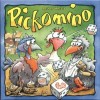
This is a review of the German version of the game, which is entitled “Heckmeck am Bratwurmeck”. As far as I can make out this is identical to the English language Pickomino, and even comes with English rules. The components are simply eight dice (with the 6 replaced by a goofy worm picture) and some chunky, domino-like “worm portions” which are just scoring chips. (The theme is chickens having a barbecue and competing for the most barbecued worms, which is odd but cute and fits nicely into the “Zoch Chickens” range of games.)

The game is a pretty straightforward “push your luck” dice game, and works well. On each roll you collect sets of matching dice and attempt to get them to add up to a total that matching the number on one of the worm portions. After each roll you either settle for the total you have or push on and trust to luck. If you get the necessary score, you can either take a portion from the stock in the centre of the table, or from another player (classic chicken behaviour, as it happens). The portions also have pictures of a number of worms on them, and whoever has the most worms at the end of the game is the winner.

Now, initially we had been playing this all wrong and thought that we had to clear all the tiles to finish and so ended up with a house rule to limit the length of the game. However, on re-reading, we now realise that when players fail to take a tile, one of the remaining tiles gets removed as an option, thus dramatically speeding the game end. This actually means that the game can be quite quick and frantic.

Overall, I think this is a good, fun dice game. It’s worth playing as a filler game for adults (and then “just one more for luck”), and it works well with even young kids (my 5-year-old is doing well at the game with a little help with adding up the totals). It is also sufficiently different (due to the scoring) from other dice games that I have come across that it may merit a place in the collection even if you have games like Zombie Dice or Cosmic Wimpout.

8
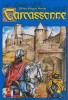
Go to the Carcassonne page

Carcassonne

62 out of 66 gamers thought this was helpful

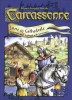
If you read the other reviews on this page you will learn the mechanics of drawing and placing tiles to build a map and placing little wooden markers (“meeples”) in an attempt to score points. There is so little to the rules that they can be explained to a newcomer in moments. The tile placement rules more or less amount to “does it look right?”.

Even the scoring is very simple, with one exception: the “farmers” (meeples placed in fields) which stay until the end of the game and are scored in a way that may not be obvious to everyone. I feel that there are two ways around this: either you ignore the use of farmers completely (which loses quite a lot of depth from the game but makes things very much easier, especially for younger children) or you explain as best you can and then just go for it; the game runs quickly (we usually take about half an hour) so you’ll probably have time for another go once everyone has seen it all work out.

Presentation of the game is great. From the colourful, chunky tiles which look great as they expand into a table-filling map, to the wooden meeples and… Well, actually that is all there is to the game other than the scoring track. You’ll want a decent sized table to play on, though, as the map can spread quite a lot on occasion.

The random drawing of tiles can make the game feel pretty random, but with a limited supply of meeples and the need to keep an eye on what other players are doing, I don’t have a problem with this. Reducing the amount of randomness (there are assorted suggestions on the tips page) can slow the game significantly and I think speed is one of Carcassonne’s great assets.

Overall I really like Carcassonne and it is definitely my gateway game of choice if I want to introduce folks to the joys of Euro games. It works just as well with young kids as with adults and has just enough depth and strategy to keep most folks happy for a little while at least (though with “serious” gamers I’d only occasionally bring it out as a light filler).

Finally, the price is excellent, which makes it easy to recommend to just about anyone.

7
Go to the Castle Panic page

Castle Panic

86 out of 94 gamers thought this was helpful

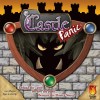
Castle Panic was an instant success in our house and has gone on to become a firm family favourite. The theme is fun (assuming you’re OK with killing things), the rules are straightforward, the components are good (having the walls and towers standing up adds so much to the feel) and gameplay is quick and fun.

We have played this mostly as a two-player fully cooperative game, though have played solitaire a few times and got up to six players in one go. Every game has been a lot of fun and everyone enjoyed themselves.

Now to be a little more critical: we lost our first game, just about scraped through the next, and then haven’t lost since (apart from one time when we decided to start with no walls in place). Most of the time it seems that the “Panic” in the title is overstating the case a bit, although once in a while you get a nasty combo happening when you can get close to ten monsters all turning up in one go, which can focus the players a bit. That said, we play as full cooperative, whereas if everyone were seriously out to get the best score, it would be tempting to sail much closer to the wind and not help each other quite so much. The rules also offer ways to toughen up the challenge (like starting without walls, as mentioned before) and gives a play mode where one player controls the monsters.

So we rarely feel that we are in serious danger of losing the game, which is certainly a shortcoming, but if you can live with that, this is a really fun game that has nice social/teamwork aspects (as long as players are allowed to make their own decisions and aren’t bossed about by an alpha gamer) and comes out fairly regularly in our house for lightish family play.

8
Go to the Dominion page

Dominion

79 out of 83 gamers thought this was helpful

The mechanics of Dominion have been well documented elsewhere, and far more thoroughly and elegantly than I could manage, so I will just quickly summarise. Basically, this is a card game where you start with only a few cards available to you and steadily build up your personal deck of cards by buying cards that give you either more buying power, the ability to take actions, or victory points. The victory points are essential, but buy them too early and you may find it difficult to get anything done in the game as they stay in your deck and can clog your hand up.

As has also been reported elsewhere, the theme of the game is pretty thin. In the core set (I have no experience of the expansions) most of the cards have pretty abstract effects like drawing extra cards or being able to play or buy more cards than your basic allowance. The artwork is variable and there is no flavour text on the cards, which may have been good for adding to the feel of things.

A set of 10 types of “kingdom card” is selected (from 25 available) for each game and depending on this selection (the number of possible combinations is in the millions) the game may end up being a near-solitaire race for the finish line or a vicious game of trying to stuff your opponents. My experience is that some of the attack cards (the Witch comes to mind mainly) can just make the game grind slower and slower, actually detracting from the fun rather than making for a good “take that” game.

So far I have been sounding a bit on the negative side, but I do really like playing Dominion. The cards mostly have simple effects, but can sometimes be combined to make powerful plays. The game has a lot of the fun of collectable card games but can be played from the box without having to construct decks, as you do this during play. The selection of cards available (not to mention the expansions!) mean that no two games will be the same (unless you want them to be). And my young daughter has enough of a handle on the game that we can have a fun game together.

I’ll probably end up getting an expansion sooner or later, but for now, this box has a lot of play left in it, making for great value in my mind.

9
Go to the Dragonheart page

Dragonheart

17 out of 21 gamers thought this was helpful

When first looking at Dragonheart, I was instantly impressed by the striking box and the nice artwork on the cards and board. Reading through the rules left me a little puzzled as there was a lot of information about how many of a certain type of card are required to get each effect, and it wasn’t immediately obvious to me how to go about winning the game.

As soon as we started playing, though, everything fell into place. The board offers unobtrusive graphical reminders of almost all of the rules, and we soon started getting a feel for how you go about chaining the claims of cards. This is a really elegant game that plays very quickly and intuitively. A measure of its worth to us as a family is that between myself, my wife, and our 5-year-old, any pair of us enjoy playing it together. That makes Dragonheart pure gold in our household.

A word on the theme of powers battling to decide the fate of the Great Dragon: well, probably the best word here is superficial. The theme is as paper thin as I have seen in any game and runs no further than the (high quality) artwork. But in this case, it really doesn’t matter, although our daughter loves the idea that there are dragons. I can really imagine us wearing this game out in the coming months.

7
Go to the Forbidden Island page

Forbidden Island

97 out of 112 gamers thought this was helpful

Forbidden Island is a simple, but beautifully presented cooperative game for up to four players (though it is possible to play with more) which plays quickly and provides quite a lot of fun for a not-too-demanding group.

The playing area is built from a set of chunky, well illustrated tiles which each illustrate a location on the island, where the players are trying to recover four precious artifacts, represented by rather nice models. Each player has a role which provides a special ability, most abilities being special movement capabilities. The basic task is to collect four cards which match the same artifact (you draw two of these cards during your turn), go to a tile where that artifact can be found and trade the cards for the item.

The difficulty comes from the fact that the island is sinking. At the end of each player’s turn cards are drawn to indicate which locations get flooded (the location tile gets flipped) or, if already flooded, sink permanently beneath the waves. The rate of flooding increases during play and a cute little mechanic makes it more likely that once a location has flooded, it will flood again. On the plus side, players can shore up locations to remove the effects of flooding.

In play, collecting four matching treasure cards can be quite frustrating, but some of the player abilities make it easier to work as a team and trade cards around. The game is not too hard, although you can set the starting difficulty at different levels, which can help increase the challenge. Overall the game seems rather lightweight, but its presentation and quick play makes it popular in our house and one that will continue to be played as a fun family game. Oh, and the price to own this makes it a game I can easily recommend to other families.

7
Go to the Family Fluxx page

Family Fluxx

21 out of 23 gamers thought this was helpful

So, Family Fluxx, eh? Well, if you’ve played the original version of Fluxx I can just say that this is exactly the same, but with fewer cards in the deck, no creepers (which weren’t in the early versions of the game anyway), and focussing the goals and keepers on things that are maybe a little more kid friendly than the original. Oh, and there are rules that affect only kids, parents and grandparents too.

If you don’t know Fluxx, then the game is odd. You start off with basic rules that you draw a card then play a card, with no way of winning, but some of the cards you play will change the rules and add victory conditions. Many more adults seem to have difficulty understanding this than kids, but it’s a game where you might as well just show everyone a few cards by way of example, then start playing. Often someone wins by accident anyway.

I’m not sure that most families would need this version of the game as opposed to one of the other sets. The smaller deck size means that you are a little more likely to have the goals reached quickly (a common criticism of Fluxx is that once in a while, a game can go on seemingly for ever), and for younger kids the keeper and goal cards are pretty much all things that they can identify with (though a few are USA terms that aren’t as familiar here in the UK). I suppose there is also the benefit that if the kids play with this set, your main set is likely to last longer.

Of course, the acid test is what the kids think. My daughter has played a few games now and enjoyed it, though it’s far from her favourite.

9
Go to the Coloretto page

Coloretto

18 out of 21 gamers thought this was helpful

Coloretto is a very simple game. You aim to collect cards of various colours: the largest three sets you have score in your favour, and anything else scores against you. On your turn you either draw a card and place it in one of the rows of cards on the table (max. 3 cards per row) or you take a row and add it to your collection (which ends your involvement in the round). That’s pretty much it.

So the rules are extremely simple, what about the theme? Well, it’s non-existant. This is about as abstract a game as you will find: it’s just about collecting colours. And on the subject of colours, I’m a little concerned that not everyone’s colour vision is perfect, but each colour has a different texture on it, so hopefully that will differentiate them enough.

I first played Coloretto a few years back, but it is only recently that I have got my own copy and played it a whole load. And the more I play it, the more I like it. Games only take a few minutes to play and contain a surprising degree of subtlety in play — far more tactical than strategic, though, as you mostly need to respond to the current state of play rather than execute long-term plans. My five-year-old daughter enjoys the game, and is getting pretty good at it, and I would certainly bring this out as one of my top choices for a filler game in an adult group. I also like that there is a tweak to the set up for two player games, which works very well.

Overall: it doesn’t cost much, it takes up very little space, it is quick to learn and quick to play, game play is slick and subtle, and I can’t believe it took me so long to get my own copy!

7
Go to the Sleeping Queens page

Sleeping Queens

14 out of 16 gamers thought this was helpful

Sleeping Queens is very much a game aimed at kids, and fairly young ones at that. It is nicely presented with bold, colourful artwork, and there is no real reading required. The king and queen cards have names written on them, but the only things that really matter are being able to recognise the Cat, Dog and Rose queens for their special rules, and looking at the pictures tells you everything you need to know. Some understanding of numbers is required and the ability to do simple addition, but if that is too much for the kids, you can easily leave that part of the game out.

The core of game play is playing king cards, which allow you to choose a queen to wake from the face down spread of queen cards. Collect enough queen cards or get high enough scoring queens and you win the game. Other special cards allow you to steal queens or send them back to sleep, with others that can block these actions. Finally there are the number cards which do nothing but block up spaces in your hand. You can discard one each turn or, if you are lucky, get rid of pairs or sets of three or more cards that make a sum (eg. 2 + 5 = 7 and you can discard 2, 5 and 7).

Overall, the game flows very well. The mathematical bit with the number cards adds nothing for adults, but my daughter loves working out the sums and gets a real buzz from that aspect. The rest of the game is a reasonably fun collecting game with a gentle “take that!” aspect to it. I would recommend this to families with fairly young children (probably between about 5 and 9, depending on the kids) as it is the sort of thing the little ones are likely to love and the adults will be able to put up with playing a few times. I can’t imagine a group of adults wanting to play it themselves, though.

7
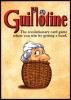
Go to the Guillotine page

Guillotine

17 out of 20 gamers thought this was helpful

As has been said elsewhere, the theme for Guillotine is pretty grim, being based on the near-industrial scale slaughter of nobles (and anyone else inconveniently in the way of the regime) during the French Reign of Terror. This game makes light of the situation in a way not unlike the film Carry On Don’t Lose Your Head (though not as full of dire puns), and I rather like it. I won’t, however, be playing this with my daughter in the near future.

The mechanics are simple: line up a load of noble cards (which all have nicely executed comic-style artwork), then each player has the chance to play an action card, then executes the noble at the front of the queue. You score points for nobles you execute; some have negative scores, and some have special effects like preventing you playing an action card or being scored in a non-standard way. Action cards mostly allow you to make changes to the order of the queue, but some provide bonus or penalty scores or have more exotic effects like swapping hands with another player.

This isn’t a game to worry too much about strategy, but there are some things to look out for and the possibility of some fairly clever plays to improve your lot. I’d class this as a lightweight filler game that is not completely trivial.

All in all I really enjoy Guillotine. You’ll have to make your own mind up about the theme, but the mechanics fit the theme well and make for a fun, fast-moving game.

9
Go to the El Grande: Decennial Edition page
30 out of 33 gamers thought this was helpful

I’ll come right out and say that El Grande is one of my all-time favourite games. It just pushes all the right buttons for me. I’ll also state for the record that I don’t have the Decennial Edition: my copy is the original German version, alongside a couple of separate expansions (the German versions of Intrigue & the King and Grand Inquisitor & the Colonies). Rather than describe the rules, I’ll try to explain some of the things I like so much…

First, the presentation is lovely, with artwork that fits the theme nicely but slips unobtrusively into the background. I like the classic Eurogame cubes and there are plenty of them here, plus the tower is a nice visual aspect and provides a fun and intriguing element to gameplay.

The game is an open one with all players having an equal, almost-complete view of the state of play, but the simultaneous decision mechanism that comes in to play occasionally, plus the random sequence of the action cards means that there is still much to guess about.

The real heart of the game is the interaction between the priority cards and the action cards. The latter being revealed to everyone at the start of each round means that there is a good opportunity to make sure less-experienced players are fully clued up about the moves available and there is a natural opportunity for discussion.

I enjoy some negotiation and diplomacy but don’t get on quite as well with games that rely on it as I feel this can really slow the game down. El Grande, for me, fits into the sweet spot, rewarding some discussion and dealing, but getting too deeply into it is rarely worthwhile. Similarly, I’m not a strong long-term planner, preferring more tactical games which require you to work with what you have at the moment, and El Grande suits me perfectly here too. It is rarely worth planning beyond the next opening of the tower (in fact that can shake things up so much it isn’t usually even possible).

My friends who are power gamers, diplomats and big-picture strategists who like working to a long-term plan don’t generally get on with this game quite so well. But for playing fast and loose, adaptive tactics in a game that requires you to be constantly looking to play the angles, this is one of the best I have played. I love it.

For the record, I agree with Ururam Tururam about the expansions: they don’t really add much and the basic game is just so darned good that there isn’t any need for them.

7
Go to the The Settlers of Catan page
45 out of 53 gamers thought this was helpful

I first played Settlers in the mid-90′s when it was pretty new and a friend brought it to our Friday night games session. I liked it, but got bored of it — though only after playing it every week for six months or so. The reason for my boredom was that everyone got so good at it that no mistakes were made and the game was more or less down to the dice. That said, the fact that we got so many plays out of it before the novelty wore off has to stand as testament to the quality of the game.

After years of playing only very occasionally (and enjoying the game for the most part), Settlers has come back into my life again as a family game and one to play with less game-wise visitors, and it is giving joy once more. It’s never likely to get back into the “every week” zone, but it’ll keep coming out until all the pieces wear out.

Settlers of Catan is far from a perfect game, but it is darn good and stands up better than most to re-playing. For its accessibility, constant involvement of all the players, swift game play, general fun levels, and value-for-money, I’d say Settlers is a must-have for any game cupboard.

7
Go to the Fluxx page

Fluxx

26 out of 34 gamers thought this was helpful

There are a lot of varied reviews for Fluxx both here and elsewhere, and I think most of them are right: it’s light and fun, very silly, makes little or no sense, can be over in one minute or half an hour, can be very frustrating, and can’t be taken seriously.

My experiences have been almost entirely positive. I have introduced a good number of non-gamers to it and after initial confusion (“what do you mean, there’s no way to win yet?!”) they have invariably enjoyed the game and wanted to play again. I should rephrase that: they have enjoyed the experience of being in a group playing the game. That, I think, is what Fluxx is all about, having fun with friends. Strategy is minimal, and gameplay is chaotic, but the table talk and overall experience is generally great.

In summary: just relax, try to enjoy yourself, don’t think too much, and be at one with the game and the other players.

× Visit Your Profile