Player Avatar
Gamer - Level 7
BoardGaming.com Beta 1.0 Tester
Petroglyph
Explorer - Level 3

Marvin K.

gamer level 8
26046 xp
followers
27
profile badges
Master Grader
Watcher
Judge - Level 1
Champion
recent achievements
Gamer - Level 8
Gamer - Level 8
Earn Gamer XP to level up!
Town Crier
Town Crier
Find your favorite games and share them with your friends via the social sharing buttons.
Bard
Bard
Find your favorite games and share them with your friends via the social sharing buttons.
Spread the Word
Spread the Word
Find your favorite games and share them with your friends via the social sharing buttons.
Go to the Kingsburg page
Go to the Roll Through the Ages page
Go to the Tichu page
Go to the Defenders of the Realm page
Go to the Ascension page
Go to the Serenissima page
Go to the Fortress America page
 
Go to the Tokaido page

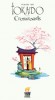
Tokaido

15 out of 18 gamers thought this was helpful

Before I review the game I want to take a moment to say what a beautiful game this is. Halfway through the game take a moment to stop and look at it.
Now for the review. The game is simple and easy to teach.
Your token is traveling from one end of the Road to the other. There are locations along the way that trigger various game effects. Each location has 1 or 2 spaces on it. Each space can only be occupied by one player’s token. The spaces are as follows: Souvenir stand: To stop at this space you must have at least 1 coin. You draw 3 cards. The price ranges from 1-3 coins. Each card has a symbol on it. You immediately score points for the cards you purchase. The goal is to collect sets with different symbols on them. A full set has 1 of each symbol on it. Throughout the game you will have chances at these sites to add more cards to your sets. This is one of 2 weakspots in the game as you can rack up the largest amount of victory points(VPs) on this space. HotSprings: Stopping here gets you a card worth 2-3 points. Temple: This is the other space you need money to stop at. You donate 1-3 coins for a corresponding amount of VPs. At the end of the game you earn up to 10 VPs based on how much you gave relative to other players. Panoramas: There are 3 different panorama spaces. When you stop on one you get the next card in that sequence for VPs worth the number on the card sequence. There are panoramas with 3,4 and 5 cards in them. The drawback is once you complete a panorama you can no longer stop at that space on the road. However, if you are the 1st to complete a particular panorama you get a 3 pt. bonus. Visitors: Stopping here lets you draw a card. The visitor grants you a bonus. It can be anything from money to bonus cards. Inns: You must stop at the inns and cannot leave until all players have arrived. At this space you may purchase a meal for 6 VP. Farms: You gain 3 coins.
The unique part of this game is that you may move along the road as much as you want. However, The person in last place,by position, moves next. With some careful timing you can end up moving more than once before another player gets a turn.
At the start of teh game everyone blind draws 2 characters and chooses one to play in the game. The character you choose determines your starting money(2-9 coins) and gets a special power that works in relation to one of the game spaces. This is where the other problem in the game appears, because if 2 people pick characters with powers based on the same space it can be a big handicap.
The game is fun and there is enough tension in the decision making process to keep you focused. Money is tight throughout the game..
As I said earlier this game is easy to teach and has good replay value. Check it out.

 
Go to the Le Havre: The Inland Port page
24 out of 26 gamers thought this was helpful

I have played the game twice now and there is good news and bad news. First we will deal with the basics and the good news. The game is fun. If you liked Le Havre and/or Ora & Labora you should like this game. It is easy to learn and easy to teach, but there is plenty of challenge in the decision making process.

To start with you will sort out the building tokens by the letter on the back of each one into 12 groups. Each player takes a wheel with a spinner and a counter board as well as a set of counters-you have the choice of 2 sided counters or matching colored cubes- and 3 francs.

Then place each of the counters on it’s matching color coded start space. Brown=wood; blue=fish; yellow=wheat; and red=clay.

The A buildings are placed face up in the play area between the players. The spinners on the wheels are placed at the top of the wheel(A for player 1 and G for player 2). Under each letter is the total # of actions the players get to take that round. The number of actions is odd and ingreases by 2 after every 3 rounds i.e. 3-5-7-9. The start player for any round has a sunburst at the top of their letter and yellow line around the letter. On the inner part of each player’s spinner is a circle divided in 6 sections. the sections are 0-2-3-4-4 with a money symbol and a building silhouette with an exclamation mark.

The first player now starts. You have 2 choices-A) build a building. At the top of each building token is a cost, in the main area of the token is the game effect. Buildings require wood or clay or both, food(fish or wheat or combination), or money to build. When you build a building to pay for it move the counter to the proper spot on the counter board. The bosrd is numbered 0-10 across the columns and each level is numbered starting at 0 and increasing by 3 for each level. After paying you place the token in the 0 section of your wheel. B)The second Action you can take is to use a building. to use your building look at the section it is in and use the effect(per the instructions) that many times and then place the building in the 0 section. To use your opponent’s building you must first pay him 1 franc. In the 1st round there are 3 actions so the players will alternate 1-2-1. After that each player moves their spinner counter-clockwise 1 space. Player 1 will be on B and 2 on H. The B buildings will be added to the play area and you will see that there are 3 actions and player 2 goes first so play will be 2-1-2. You will also notice that buildings placed in the 0 sector are now in the 2 sector.

This repeats until the last round when all buildings are now available for play. The winner has the most money from building values and unspent money. Warning if on a turn any buildings end up in the section showing the special symbol you can take the action to sell them to the bank for 1/2 of their value and they are open for either player to buy on their next turn. If the spinner would pass them back to the 0 they go back to the playing field and you lose them and have to rebuy them. The pressure of when to buy buildings and how long to let them ride, to long and your opponent might pay you to get the game effect help make the game challenging and fun with a good replay value.

Now for the bad news I mentioned. The game tokens are small. I understand why they probably did it- any larger and they wouldn’t fit on the wheel- but I would have paid a couple of more bucks for a larger set up. Secondly, there is only 1 copy of the building effects at the back of the rule book. I recommend making 2 reference cards , 1 for each player. Overall, I am glad I got the game and with a play time of about 30 minutes I will take the game with me as a filler.

6
Go to the Hooyah: Navy Seals Card Game page
86 out of 121 gamers thought this was helpful

The publisher’s review gives a very good explanation of the actual game play so I will concentrate on my impressions of the game.
Rulebook- For a fairly straightforward game I found the first reading of the rules to be a bit haphazard and confusing. Read the rulebook THUROUGHLY before playing. By this I mean read the examples and sidebar materials. Also and comprehensive reading will clear up a lot of terms. Overall, our 1st play after 1 reading led us to misplay a major rule and consider the game too easy. When we replayed with our mistakes corrected it was a much better game. Now I know that every time you 1st play a game you miss things in the game, but the rulebook is not organized in such a way as to make everything easy to pick up. Game terminology especially should be explained to the players before it is used as an explanation for something in the rules. It would also help if all of the relevant information for an action or game component were located in the same place in the rulebook.
After we corrected our understanding of the game’s rules the subsequent games were much more enjoyable and we found it to be a decent, fast game.
However, there are only 5 missions to undertake so I wonder about replay value in the long run.
Sadly, there are a lot of games on the market and more arriving all the time and I just don’t see this one holding it’s own at the gaming table.

 
Go to the Toc Toc Woodman page

Toc Toc Woodman

49 out of 71 gamers thought this was helpful

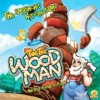
WHAT’S NOT TO LOVE. You have a plastic tree stump. On top of this you place 9 “rings” each ring consisting of a core and 4 pieces of bark which slide into grooves on the edge of the core piece. You also have a plastic axe with an oversized head that you use to tap the rings. if you knock the rings far enough out of line the bark pieces will fall out of the groove and land on the table. Each piece of bark is 1 point. But, be careful! if you tap to hard the “tree” collapses and the game is over. Whoever did not cause the collapse and has the most bark pieces wins. The game plays in 1-10 minutes depending on how careful you are. It is fun and visually appealing to people of all ages.

7
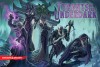
Go to the Dungeons & Dragons: Lords of Waterdeep page
43 out of 62 gamers thought this was helpful

The box resembles one of the old 80s/90s D&D base Sets. One of my friends kept asking if I was sure this was a new game. There have been several new D&D boardgames over the past few years. This has nothing to do with them. Also, if you prefer strong thematic games thsi is not it. This game could easily have been called Farmers of Rivendell or even Farmers in the Dell. Despite that, this is a good fun game. It is easy and quick to teach and has good replay value.
The Game- The board has several permanent locations(buildings) most of which can only be used by one character token at a time each round. Each player starts the game with 2 quests, a player board, 2-4 character tokens(based 0n # of players), 2 Intrigue cards and an amount of money based on where the character starts in the player order and also a Lord of Waterdeep card(which is kept secret from others). There are 5 “resources” in the game- money and 4 different colors of cubes representing different D&D character classes-Warrior, cleric, wizard and rogue. Your player board represents a tavern. During a round you place a token in a building space and immediately get a benefit. Mostly, these are colored cubes which are then placed on your player board. For instance, one space gives 2 orange cubes. You take 2 orange cubes(warriors) and place them on your board(tavern). Everytime you place a token you may then complete a quest. Quests are completed by turning in to the supply the correct quantity and combination of cubes and money. The reward is Victory Points and sometimes money, cubes or quests. There are 5 different types of quests-Arcana, Piety, warfare, Skullduggery and Commerce. A warfare quest requires more orange cubes(Warriors) to complete, while an Arcana requires more purple(wizards) to complete. This is important as most Lord cards give you bonus VP at the end of the game for 2 different quests which vary from Lord to Lord. Other spaces allow you to build more buildings or get more quests.
One space allows you to play Intrigue cards. Intrigue cards can benefit you and or benefit/hurt your opponent at the same time. The game has a built in timer track on the board and ends after 8 rounds.
At the end of 8 rounds you add any end of game bonuses to your score and high score wins.
So will I keep playing it. Yes. Do I recommend it? If you like Eurogames-then yes. As I said earlier the theme does not have game influence nor is this connected to earlier D&D boardgames, but don’t let this discourage you from at least trying the game.

9
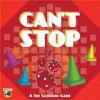
Go to the Can't Stop page

Can't Stop

20 out of 28 gamers thought this was helpful

This is a fun game that has been around long time. This edition is the 3rd version and nothing has been changed.
To start choose a color and take all the markers of that color. The board shows the numbers 2-12(values of a pair of dice). These numbers are each at the top of a column of spaces, the number of spaces is based on the probability of rolling that number, which are different amounts. There are also 3 white(neutral) markers and 4 dice. The goal is to advance your markers up the columns and be the first to place your marker on a number for that column. On your turn roll 4 dice and separate them into 2 pairs. Then place a white marker on the space for that number showing your current progress-if you don’t have a marker in that column place the white marker in the 1st or bottom space, if you have a colored marker in that row place the white marker in the space above it in the column. Do this for both numbers if possible. You may then roll again. If all 3 white markers are on the board you may continue to roll but must roll 1 of the 3 numbers with a white marker on that column. If you stop advance your colored marker to where the white markers are. However, if you continue to roll and don’t roll 1 of the 3 numbers needed to move a white marker your turn is over and you lose all the progress you have made for that turn and do not advance or add colored markers. The winner is the first person to place their colored markers on 3 numbers. Only one person can cover a number, but all can try for it at the same time. Note: Once a number is covered by colored marker it is out of the game and is useless if rolled even by the player who covered it. i.e. no player can have a marker in that color or advance a marker.

9
Go to the Defenders of the Realm: Hero Expansion #3 page
21 out of 27 gamers thought this was helpful

This set adds 4 new characters(bringing the total to 21 characters) and another pack of randomized event cards. The 1st expansion strengthened your fighters, the second strengthened your support character possibilities, this set seems to focus on mobility and increasing your card use flexibility and by that I mean that as a whole these characters can build up hands of cards for attacking the generals a little quicker. Again, this set is not useable without the base game. Here are the characters: FELINE- If she is on a location with other heroes once per game round she can “shadow” a hero, that is move with them if they move on foot or by horse. More importantly, if she is on a space with a general she can use this ability to move with them if they move, every time they move, so the generals cannot get away from her. She also gets to reroll all combat 1s rolled the first time she rolls them and this does not cost an action. SEEKER- At the start of her turn she draws the top Darkness Spreads card and reveals it so she knows what the first bad event happening at the end of her turn will be. She only draws the 1st card even during mid and late war. Additionally, she may use any purple cards as battle luck cards(reroll all failed dice in an attack) and she may use the dice the special(purple) cards can be used for as if they were wild cards-so she can use them to attack any general not just the ones they are allocated to. Finally, she may spend an action to scatter all minions on a location she is at to adjacent locations, although she cannot use this ability if a general is present at her location. SHAMAN- The Shaman starts as a human but once per turn may shift into a bear or wolf or back to human when in animal form. When he shifts to bear he automatically heals one wound and he may reroll all dice(successes and failures) once per combat. When he shifts to wolf form he may move up to 2 spaces per action and will take no wounds(except fear) from minions if he ends his turn on a green location. The Shaman may not enter Monarch City or an Inn while in animal form, but may shift while at those locations. Shifting is a free action. In human form he may also spend an action to eliminate all minions on a location he is at, but must roll 1 die, if it is an odd number he taints the location. THIEF- May draw 1 extra hero card at end of turn for each adjacent location with 3 minions or a general on it., however, if the card drawn matches the color of the location that caused it to be drawn the Thief takes 1 wound. When she draws the 1st darkness spreads card at end of her turn she draws 2 and chooses 1 that will happen, the other one is discarded or put back on top of the deck, her choice. Additionally, she gets to reroll any failed combat die rolls once per combat if she is on a treasure chest. This ability may be used against generals. Finally, if she defeats 2 or minions in a single combat roll she immediately draws a bonus Hero card.
There you have it. These characters when mixed in with the others will give you the ability to focus on attacking the genrals quicker and hopefully winning thw game more often. Good Luck.

9
Go to the Defenders of the Realm: Hero Expansion #2 page
24 out of 28 gamers thought this was helpful

This set adds 4 new characters and another pack of randomized event cards. While these may not be the strongest set of characters in terms of fighting, but their overall support of the party makes them vital additions especially if you play some of the later scenarios created for the game and published online by the game creator. This is an expansion and is only useable if you have the base game. Here are the characters: DRUID- He gets to roll 2 dice and on a 5+ removes a taint crystal from a location he is at without needing to use a Hero card. Additionally, if he is on a green location he can attack minions on any other lgreen location on the board at a -1 to his dice rolls. Finally, if he ends his turn on a green location he can heal himself of 1 wound and takes no minion or fear damage. ELF LORD- He is always 1st in the game. He has a re-roll token which he may use once per turn to reroll 1 failed die roll. If he does not use it he may give it to another player to use on their turn. Additionally, he can move to an adjacent green location for free once per turn as long as he still has an action token available for use. Finally, on his first attack against minions at a location he gets to roll one extra die, but must choose a specific color before rolling. More importantly, this ability works against Generals. HEALER-First, for 1 action she can heal up to 3 wounds of any heroes, including herself, at
her location. Furthermore if she ends her turn at a location with other heroes they heal 1 wound automatically. Additionally, she may spend 1 action at a tainted location and roll 1 die for each minion located there. Each roll of 5+ removes a crystal without using a hero card. Finally, she ignores a General’s combat skills. This has been explained in an addendum sheet to include Varkolak’s ability. What this means is she gets rerolls during combat and may play battleluicks that she has on other players or have other players play their battle luck cards on her. MONK- This character starts with 2 quests and always has 2 quests. Additionally, all natural 6s count as 2 hits except against Dragonkin. Finally, when she would take any wounds from minions or Generals(except fear) she rolls a die for each wound and on a 5+ does not take the wound. As I said earlier they are not strong overall fighters, but their special abilities can have a major impact on whether or not the party wins the game.

9
Go to the Defenders of the Realm: Hero Expansion #1 page
30 out of 34 gamers thought this was helpful

If you like the Defenders of the Realm game you will enjoy this chance to add 4 new characters to the game. In addition to the new characters you get a new Paladin Figure that is in a scale that fits better with the other figures. You also get a package of, unfortunately, randomly packed Global effects cards to add to your game. The Global Effects cards were first added to the game in the Dragon Expansion. Some are good and some are bad for the players and you add some of each to the darkness spreads phase of the game. When one is revealed it takes effect and stays in effect until a new event is drawn. You also draw a replacement DS card for the turn in which you draw the effect card. If the new DS card is a Global card discard the second card without effect and continue to draw until you get a regular DS card.
*************THE NEW CHARACTERS***************************************
The Captain of the Guard-His primary ability that you will use is the fact that he can give unspent actions to other players to use on their next turn. THis is helpful when you have 1 last action and no good use or by planning ahead to help another character who needs 1 more action than they have to accomplish something useful(like joining the group to launch the attack on the general).
The Adventurer-The most attractive ability here is a handsize limit of 14 cards. A 40% increase in hand size is nothing to sneeze at.
The Chaos Wizard-His abilities to rain down destruction all over the board(at random) helps a lot when minions are about to overrun the board.
The Assassin-Shadow Walking(disappearing from the board as your last action and reappearing up to 3 spaces away at the start of your next turn) means this character is a powerful and flexible threat all over the board.
These characters add a lot of new options to your gameplay.

8
Go to the Kingdom Builder page

Kingdom Builder

73 out of 107 gamers thought this was helpful

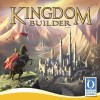
Andy has given a good explanation of the mechanics so I will focus on the strength and weaknesses and who will probably like it. This is another good tier 1 game(Settlers, etc…)If you are trying to encourage players to try boardgaming. The placement is entirely luck driven. There are 5 terrain types and at the end of your turn you draw a card and that is the terrain where you will do your mandatory placement(of three settlements) on your next turn. In my first 2 games I did not draw a single flowers terrain card. The rule that all settlements must be placed adjacent when possible adds a little strategy for the more experienced gamer while limiting choices for the novice. The player interaction is indirect, since you don’t know what terrain your opponents are holding you cannot interfere on purpose, however, since you all play under the same scoring conditions a given location will usually be equally attractive to all and keeps anyone from feeling to picked on.
So, if you like luck based games with only a little in the way of planned strategy or are looking for games to ease your friends into the world of boardgames this is a good choice. If you like deep strategy, control of your fate, and/or heavy player interaction this is not the game for you.

8
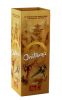
Go to the Coloretto page

Coloretto

24 out of 29 gamers thought this was helpful

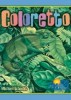
There are already a couple of good reviews on how to play the game so I will focus on who should play and why. This is a good game to try if a) You are curious about German Card Games. GCGs are different from there American counterparts because they focus on a more aggressive interaction between players and tend to have negative point values that outweigh the positive points. Coloretto is one of the “lightest” of these games. b)You are looking for a game that is quick enough to be a “filler” game, but challenging enough to hold player interest for your gaming group. This game is easy to learn, plays quickly, and has enough basic strategy to be challenging. c)You want a game for friends and family that can be played by a wide variety of ages and gaming aptitudes. It’s always hard to find a game that will allow a mix of hardcore gamers, newbie gamers, and kids to play together and have a good time. This game, because it is easy to teach and learn, has some basic strategy, and has player interaction provides such a gaming experience. d)Finally, this is a crossover game. If you get people playing who are not board gamers once they are hooked on the game you can introduce them to Zooloretto. If you are not familiar with it this is a tier 1 (introducing newbies to boardgaming) that takes Coloretto and turns it to a board game that adds a few simple elements to the game, but keeps the original concepts of the game. I recommend the game, I have been playing it for many years now and am still using my original copy, which if you new how much I game means that this statement is actually an impressive testimonial to the durability of the components.

6
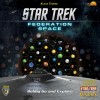
Go to the Star Trek: Fleet Captains page
39 out of 50 gamers thought this was helpful

The differences of the game components reflect the hit and miss elements of the game itself. This game has an MSRP of $115. What do you get for that? 12 gorgeous ship miniatures for the Federation each visually distinctive and nicely detailed. 12 Klingon ships(5 different hull designs) which while nicely detailed will need painting or some way to differentiate easily(the ship names are on the base) at a glance which ship of a given design are which. The board is made of hexagons randomly laid out facedown at the start. These are a good quality linen stock paper that is light and flimsy and cut poorly. While I saw no miscuts the hexagons were not cut to a uniform size. The cards are equally flimsy and will need to be sleeved for use. The dice look like something you might get out of a gumball machine and need to be replaced before you play much. On to the gameplay:
You have a deck of 12 ship cards with ratings of 1-6. you begin drawing random cards to build a fleet with a total value of 10. There is a mechanism so you will not have a value of more than 10 and it works fine. There are 3 types of missions-combat, influence and science. Each has a rating for each of these types. Step 2 is to draw missions from each deck, again you will have a total of 10 missions. Next you go to the master decks for your side. Similar to some other card based games you now choose 5 of the 10 decks available to build your play deck for the game. This is one of the problem areas as with deck familiarity you will have a huge advantage over newer players. After my first game I reviewed my choices and realized 2 of the decks I chose were virtually useless for my fleet.(I had a Klingon fleet which was strong on science and weak on combat of all things!) You shuffle these cards together and then draw four. Now you are ready to play. Each ship has an adjustable dial on the base that can be set to any “click” in one of three sections. The white section is an undamaged ship, the yellow area is yellow alert and represents taking 1 damage, and the red is red alert and represents taking 2 damage. 3 damage destroys the ship. At any time you will have 3 a choice of 3 missions available to score 1 or 2 points. Some missions are secret and you do not reveal them until completed and you can also receive points by destroying enemy ships. 10 victory points wins the game. This is the next unbalanced point in the game. My opponent had a mission to control to adjacent areas of space for 1 victory point. I had a similar mission for 2 victory points if I controlled EIGHT adjacent spaces. Since the missions only give 1 or 2 points it quickly became obvious that a bad mission draw really unbalances the game. Most of my missions involved controlling huge amounts of territory or performing some task all the way across the board in my opponent’s territory. The final score was 10 to 5 and my opponent had 2 ways on the last turn to achieve the final point which he tried and he achieved with ridiculous ease. As for the rest, on your turn you can do 3 actions, but normally each ship can only be assigned 1 action. These actions are to scan an area before moving into it or to attack or teleport crew or cargo to or from ships and planets, and cloaking Klingon ships. Each click on the ship has a stat for engines, sensors, weapons and shields and different clicks represent feeding power to the different systems. Non action token actions include playing cards from your hand, moving each ship, doing power adjustments(resetting the ships stats), discarding mission cards and a few other game activities. The first play of this game can be confusing as to what you can do when, as I know we had some confusion and my friend had printed out some nice player aids to help us reference everything.(sidenote: most games have a 1 or at the most 2 page player aid, ours was 3 pages) I love Star Trek and would play again hoping that I missed something. I would also play in the future again with the idea that future expansions might fix problems now in the game,but at this price I expected better components and a better game so I will not be buying it anytime soon, unless a disgruntled friend offers me a cheap copy.

8
Go to the Zooloretto page

Zooloretto

23 out of 31 gamers thought this was helpful

This is another very good tier 1 game. There is enough strategy for th regular gamer and still light enough on the rules for the nongaming gamer. This game uses the same basic mechanism that drives the card game Coloretto. The idea is that you start with a zoo with some exhibit areas that are empty. each area can only be filled with one type of animal and can only hold a set amount of tiles. There are a wide variety of animals pictured on tiles. There are also tiles showing money and vendor stands, etc… The majority of the animal tiles show a picture of an animal, but some also have a male or female symbol on them. If you get a male/female they immediately have a baby to put into the enclosure. There are 5 “trucks”, wooden pieces that hold up to 3 tiles each. You start the game with a board with exhibit spaces and a barn space on it as well as additional boards that you can pay to develop during the game, and a small mount of money. All but a few tiles(enough are set aside facedown for 1 complete final round and covered with a wooden marker) are then placed in a cloth bag. You use as many trucks as there are players in the game and they go inthe middle at the start of a round(empty). On your turn you may take an action-1)Draw a tile and put it on a truck. 2)Claim a truck, even if it is not full. 3)Pay to remove an animal from your barn space. 4)buy a new exhibit area. 5)Buy an animal from another player’s barn and put it in an exhibit area. 6)Pay to move animals to the barn or another exhibit area.
Most of the actions are straight forward each turn and will be pretty obvious early on. The tension comes in later turns when trying to decide the timing of your actions. Money is always tight in the game and is earned by claiming trucks with money tiles, selling animals to other players or completing some of your enclosures that grant a onetime payment when completed. Scoring at the end is positive-completely or almost completely filled enclosures, different vending stalls,etc… and negative-different animals in the barn. This is a game about pushing your luck vs. timing your actions. The game is popular enough to still be in print and to have several expansions and spawned a spinoff Aquaretto.

9
Go to the Le Havre page

Le Havre

41 out of 63 gamers thought this was helpful

This game is one of 3 connected games and is my favorite of the 3 by this designer. The first was Agricola. This game was, as I understand it, brought about because of the criticisms of Agricola. If you are not a fan of Agricola you should check it out, if you are a fan you will probably consider it Agricola light.
There are a number of rounds based on the # of players. In each round you will get to do a number of actions dependent on the number of players. The game is about earning victory points through building buildings that have game effects and earning additional money through shipping and “renting” the buildings to other players or using buildings that generate money. All money=victory points. The resources are wheat, fish, francs, wood, clay, iron, coal, and cattle. On the board are spaces for each resource and you start the game with2 francs, 2 wood, 1 clay, and 2 fish on there respective spaces. There are 7 markers in a row on the board. These are placed randomly face down on the board and will not change order when revealed for the rest of the game. Additionally there are 3 building slots on the board. The buildings for the game are shuffled and divided randomly between the slots. They are numbered and placed in ascending order on the slots. Each player starts with 5 francs and 1 coal. The 1st player then places their token(a small wooden ship) on the 1st marker revealing it. Each marker adds 1 each of 2 different to the proper spot on the board, i.e. 1 clay and 1 wood, or 1 franc and 1 iron, etc… The player then takes an action. The actions are 1)claim all of a resource that is on a space on the board, 2)visit a building, pay the rent if any(gold or food), and then use the building’s ability. You may additionally buy as many buildings as you can afford or purchase ships(this does not happen often), pay off loans and sell buildings for 1/2 their value. There are 3 buildings that start the game owned by “The town”. These are all places that allow you to build buildings. Buildings require a combination of wood and clay and sometimes iron to be built. To use a building you have a disk you place on that location, pay it’s rent to the owner, then use the action indicated. Besides building, actions include gathering extra resources, earning money through selling resources, converting resources, etc… All resources have enhanced versions of themselves that can be created for game purposes by visiting the proper building. Once all players have their ship token on a marker, let’s use 4 players as an example, the 1st player moves his to the next unrevealed marker and takes an action, followed by the 2nd, and the third. In this way the 1st,2nd, and 3rd get 2 actions in the first round and the 4th gets 1 action.(7 markers) The 2nd round the boats are moved in order that they are on the board to the beginning of the row of markers, so the 4th player is now 1st, 1st is 2nd, etc… There are enough rounds that each player gets an equal number of turns. At the end of each round you have to feed your workers. The amount depends on the 3 of players. At the beginning of the game there is only fish, but whenever food is required gold can be substituted. If you cannot feed them you can take a loan to make up the difference. The card indicating the amount needed is then flipped over and reveals a ship that can be built. Ships allow you to automatically provide some food at the end of each round and they are used to ship goods to earn additional money. Additionally , at the end of the round if you have at least 2 cattle or 1 wheat you will get an additional 1 of the appropriate type if it is a harvest round. These are the basic rules of the game. As well as being a great 3-4 player game, it is an excellent solo player game.

9
Go to the Defenders of the Realm page
53 out of 86 gamers thought this was helpful

First of all, I game a LOT. I support several area gaming groups. This is not all I game. That being said Let’s get to the game- It is a cooperative game. The goal of the game is to defeat all 4 of the evil generals who are gradually approaching Monarch City. That is the only way to win. However, there are multiple ways to lose- An enemy general reaches Monarch City, Monarch city is overrun by minions(enemy troops), You need to put minions on the board and have none of that type available, or the lands become to tainted(12 “taint” crystals are placed on the board). There are 8 characters in the base game + 1 mini expansion character who is worth getting(The Barbarian). You randomly select a character who starts at Monarch City. The spaces on the board are linked by pathways showing how to travel from space to space. You have a hand of hero cards (2 to start) and a quest card to attempt. There is a number in the lower left hand of your character card. This is the number of action tokens your character has. This represents how many actions you can take per turn and also how much life(hit points) you have available the average is 5, a few have 6 and one has 4. Movement-For 1 action you can move 1 space. The Hero cards you have can increase your movement up to 4 or let you teleport to various places on the board if you spend them as part of your action. The good news is that you do not have to stop in a space that has enemy minions or a general, but can move on through that space unhindered. Other actions you can take include building Magic gates(these increase the number of places you can teleport too); healing the land(attempting to remove a taint crystal);healing your own wounds; and listening for rumors at an inn(attempting to increase the number of cards you you have of a specific color). You can also fight. Fighting against minions is easy. Simply use one of your action tokens to attack all the enemy minions(max of 3) at a location you’re at. Roll 1 die(of a color matching the minion color) for each minion. Check if you hit, if so remove the minion. If you do not remove them all you can spend another action and attack again. If you end your turn on the same space as a minion you will automatically take 1 wound for each minion there. The minions of each race have a different power so that is one reason to fight them. The other is that whenever a fourth minion would be placed on a location you place one of that type of minion on each adjacent space and place a taint crystal on the space where the fourth minion would have gone. As there are only 12 crystals and it is one way to lose the game(when all 12 are on the board) you will want to thin the minions out throughout the game. Fighting the generals is the point where cooperation is needed the most. The generals ignore your character(s) completely until you attack. You get 1 chance at it. When someone attacks a general any other players that are at that space can join in. This is the other use for the Hero cards. At the bottom of the card is 1 or 2 dice. The regular cards are color coded- red Hero cards can only be used to attack the Red general, etc… Some cards are labelled Special. They grant either a special one use game effect or 1 or 2 dice towards attacking any general. Everybody who is part of the attack commits the number of cards they want to too the attack and the person who launched the attack decides the order of attack. Each general has different abilities that interfere with being attacked. If your group succeeds in scoring the necessary wounds on a general he is removed from the game and the character credited with the kill becomes the slayer of that race(when attacking minions of that color matching the dead general they are automatically killed without having to roll dice. You can also attempt quests throughout the game, if you succeed at the quests you get a reward that can aid in the game, although some are more helpful than others. You end your turn by drawing 2 Hero cards, making sure you have no more than 10 cards in your hand and then drawing a darkness spreads card. The Darkness cards put 1 or 2 minions on each of 2 different locations on the board and may move one of the generals 1 space towards Monarch city.
I enjoy the game a lot obviously, and part of that is that there has been excellent support for the game by the publisher and the creator of the game. To date there are 4 expansions and several scenarios published online.

8
Go to the Kingsburg: To Forge a Realm page
26 out of 32 gamers thought this was helpful

This takes an enjoyable Tier 1 game(Games to play with non-gamers to introduce them to modern boardgaming) and makes into a fun and enjoyable Tier 2 game(Games for those same nongamers to introduce them to a new level of strategy and decision making). My only advice would be start with the new boards and characters and then add the strips and events as your players get comfortable with the first 2 add ons. Save the chips for the last element to try as you will be surprised how sharply this divides your group.

9
Go to the Puerto Rico page

Puerto Rico

45 out of 66 gamers thought this was helpful

One problem boardgame lovers run into eventually is having enough people to play games when you have the time to play them. Sooner or later you have to try to recruit players from outside the player pool. This usually involves friends or family members who don’t normally game. What I call tier 1 games are games that are more intricate than what they are used to, but introduce novices to a lot of basic game concepts. An example of this is Settlers of Catan. A good game with lots of basic strategy elements and enough luck to allow non-gamers to play. After awhile you want to take some of these gamers to the “next level” or Tier 2. These are games with very little luck, more decision making, and a couple of choices on strategy. Puerto Rico is an excellent Tier 2 game. Experienced gamers will enjoy the game and it’s replay value. Newer gamers will be introduced to a more tactical game than Settlers, but one that has limited choices on a given turn. My only advice is teach them the rules, mention the 2 prime strategies(build vs. shipping) and sit back and play. A last caution let them play their own game. Win or lose if they make their own choices they will like the game much more. As for those not teaching games to newbies this is a fast, usually tight game with enough decision making to keep it challenging.

8
Go to the Martian Dice page

Martian Dice

13 out of 34 gamers thought this was helpful

13 dice. 1 cup. 5 icons on the dice. Push your luck game. Some surface similarities-cup, 13 dice to Zombie Dice but it is a totally different game. If you like Can’t Stop and other dice games of that type you will like this one. Humorous(or cute) theme of Martians grabbing humans, cows and ?chickens??? while the military bravely :) attempts to fight them off. Enjoy.

8
Go to the Runewars page

Runewars

35 out of 42 gamers thought this was helpful

Your first play of this game can be overwhelming. There are so many bits and it seems to take a while to set up. However, if you’re looking for a meaty strategy game this is it. After you have played it once and gotten the hang of it you should go with the more advanced set up method as the pre-generated set up in the instructions while a good way to learn the game also means the elven faction is pretty much at a disadvantage for most of the game and will not normally win. Once you are past your learning game though you will find a nice balance between strategy and luck and enough options from start to finish to give the game good replay value. The game has very nice bits and nice touches that weren’t strictly necessary, but show consideration for the gamers. An example of this is the small 3D mountain pieces for the board. A nice visual touch and a handy reminder of the terrain type(which matters in the game). This is a strategy wargame and if those interest you you will like this one.

8
Go to the Roll Through the Ages page
19 out of 33 gamers thought this was helpful

This game is a great filler game for those small bits of time during game sessions when you are waiting for someone to show up or otherwise don’t want to start a longer game. Be sure to download The score sheet for “The Late Bronze Age” if you want a more challenging game without adding a significant amount of gametime to play.

× Visit Your Profile